The flag of the United Arab Emirates is one of the Arab world’s most recognizable national symbols: a bold combination of red, green, white, and black arranged in a clean and modern design.
Adopted on December 2, 1971 — the day the UAE was founded — the flag represents the union of the emirates into a single federal state along the Arabian Gulf.
Today, it flies above futuristic skylines, desert highways, ports, mosques, and airports that connect the Middle East to the rest of the world.
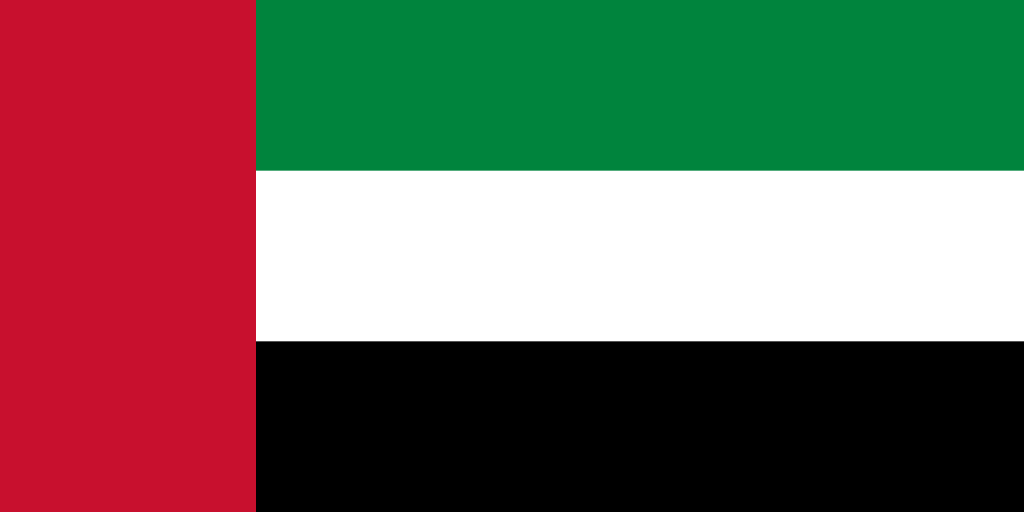
The Meaning Behind the Colors
The UAE flag uses the classic Pan-Arab colors:
- red,
- green,
- white,
- and black.
These colors appear in many Arab flags and symbolize a shared cultural and historical identity across the Arab world.
Red
The vertical red stripe symbolizes courage, strength, and the sacrifices made to defend the nation.
Historically, red was also associated with several Gulf tribes and regional dynasties.
Green
Represents hope, prosperity, agriculture, and growth.
White
Symbolizes peace, generosity, and neutrality.
Black
Traditionally represents strength and resilience, while also recalling the historical struggles of the region.
A Flag Chosen by a Young Designer
One of the most remarkable facts about the UAE flag is that it was designed by a 19-year-old Emirati student, Abdullah Mohammed Al Maainah.
His design won a national competition held shortly before the federation was officially established in 1971.
The simplicity of the layout helped give the flag a timeless appearance — modern enough for a new state, yet deeply rooted in regional symbolism.
A Union of Seven Emirates
The UAE consists of seven emirates:
- Abu Dhabi,
- Dubai,
- Sharjah,
- Ajman,
- Umm Al Quwain,
- Fujairah,
- and Ras Al Khaimah.
Before unification, these territories were known as the Trucial States under British protection.
The flag became the visual symbol of their political union — transforming a region once known primarily for pearling villages and desert trade routes into one of the Middle East’s most globally connected states.
From Desert Federation to Global Hub
Since 1971, the UAE has undergone one of the fastest urban transformations in modern history.
The national flag is now closely associated with:
- skyscrapers in Dubai,
- the political influence of Abu Dhabi,
- major international airlines,
- artificial islands,
- luxury tourism,
- and ambitious infrastructure projects.
Yet beyond the futuristic imagery, the flag still reflects Bedouin traditions, tribal history, and Gulf identity.
A Familiar Yet Distinctive Arab Flag
Many Arab countries use the Pan-Arab colors, but the UAE’s layout feels especially clean and balanced.
Unlike flags filled with stars, eagles, or scripts, the UAE flag relies purely on geometry and color contrast. That simplicity gives it strong visibility and modern appeal.
It is particularly striking when displayed at large scale — something common throughout the Emirates, where giant flags frequently dominate public spaces and highways.
QuixoticGuide Note
The UAE flag represents one of the most dramatic national transformations of the late 20th century. Within a few decades, a loose federation of desert emirates evolved into a global crossroads of aviation, finance, migration, and architecture.
Yet the flag itself remained simple: four colors, one union, and a reminder that even hypermodern skylines often emerge from deeply historical landscapes.