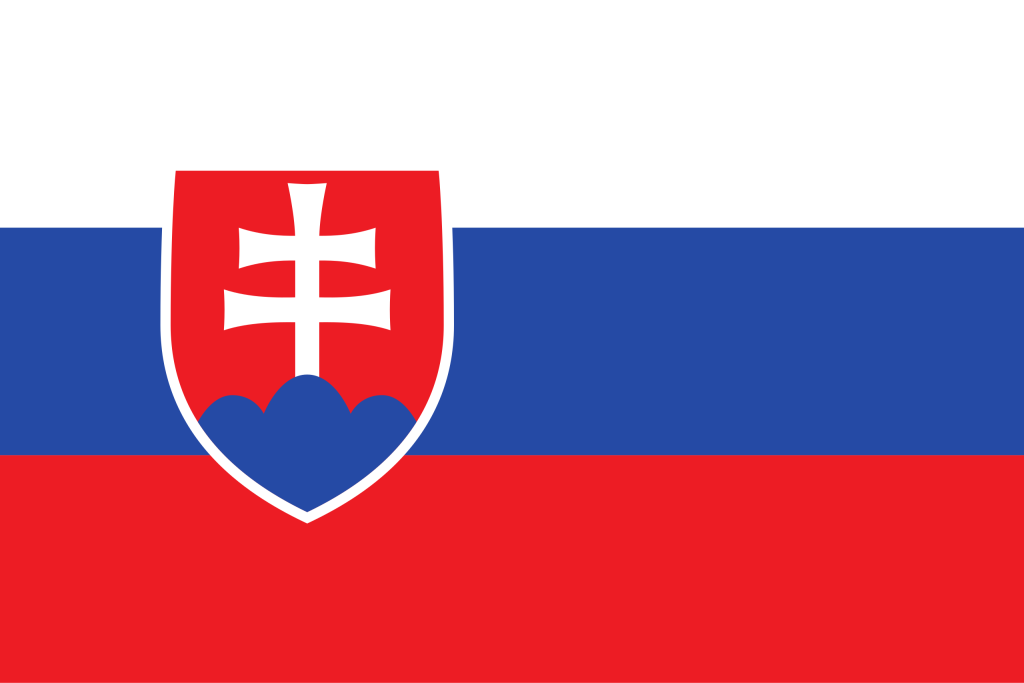
The flag of Slovakia is a proud symbol of the country’s independence, Slavic heritage, and national identity. Featuring three horizontal stripes of white, blue, and red, with the Slovak coat of arms near the hoist, it reflects the nation’s history, Christian traditions, and natural landscape. The current design was officially adopted on 3 September 1992, shortly before Slovakia became an independent state on 1 January 1993.
History of the Flag of Slovakia
The white, blue, and red tricolour has been associated with Slovakia since the 1848 Revolutions, when Slovak national movements adopted the Pan-Slavic colours as a symbol of unity among Slavic peoples.
During the existence of Czechoslovakia, Slovakia used various flags, including versions featuring the Czechoslovak national colours. As the country prepared for independence following the peaceful Velvet Divorce, Slovakia officially adopted its current flag on 3 September 1992.
To distinguish it from the nearly identical flags of Russia and Slovenia, the Slovak national coat of arms was added to the flag.
Meaning of the Flag of Slovakia
Each colour and symbol on the flag has historical significance:
- ⚪ White represents purity, peace, and honesty.
- 🔵 Blue symbolises faith, freedom, and Slovakia’s rivers and skies.
- 🔴 Red stands for courage, strength, and the sacrifices made for independence.
- 🛡️ Coat of arms features:
- ✝️ A double silver cross, representing Christianity and the Byzantine missionary tradition of Saints Cyril and Methodius.
- ⛰️ Three blue hills, traditionally representing the mountain ranges of Tatra, Fatra, and Mátra (the latter now located in present-day Hungary).
Together, the colours also reflect Slovakia’s place among the Slavic nations through the Pan-Slavic colours.
Interesting Facts
- 🇸🇰 Slovakia officially adopted its current national flag on 3 September 1992, four months before becoming independent.
- ✝️ The double cross has been a symbol of Slovakia for centuries and appears in the country’s coat of arms.
- ⛰️ The three blue hills represent the Tatra, Fatra, and Mátra mountain ranges.
- 🌍 Slovakia shares the white, blue, and red Pan-Slavic colours with several other Slavic countries but is distinguished by its coat of arms.
- 🕊️ Slovakia became an independent country on 1 January 1993 following the peaceful dissolution of Czechoslovakia, known as the Velvet Divorce.
Conclusion
The flag of Slovakia is a meaningful symbol of the nation’s history, faith, and independence. Its white, blue, and red tricolour reflects the country’s Slavic heritage, while the historic double cross and mountain emblem celebrate Slovakia’s cultural roots and natural landscape. Today, it proudly represents a modern European nation with a rich historical legacy.