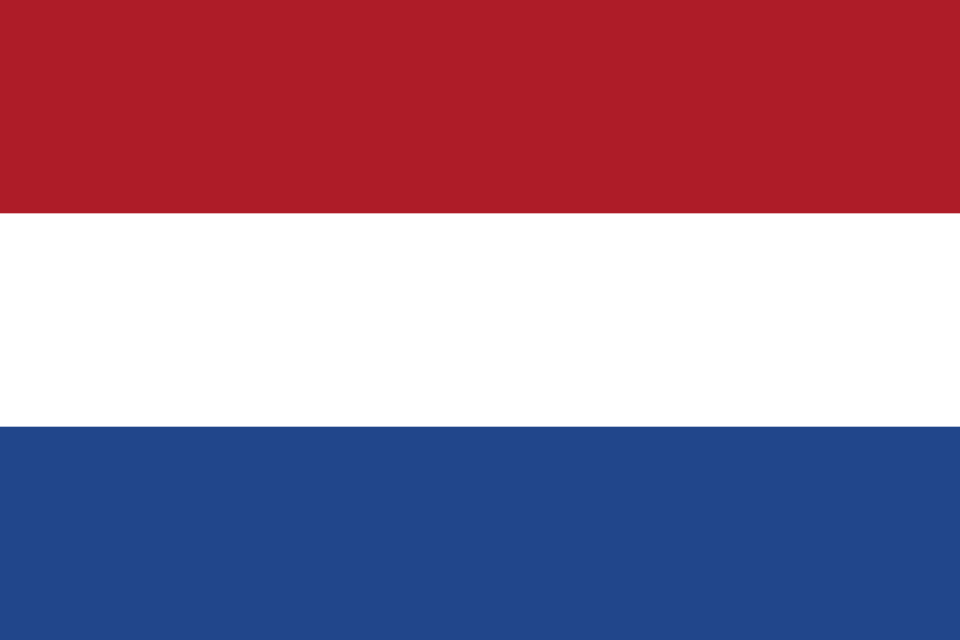
The flag of the Netherlands is one of the oldest and most influential tricolour flags in the world. Featuring three horizontal bands of red, white, and blue, it symbolises Dutch history, independence, and national identity. The current colours were officially confirmed by royal decree on 19 February 1937, although the flag’s origins date back to the 16th century.
History of the Flag of the Netherlands
The Dutch flag developed during the Dutch Revolt against Spanish rule in the late 16th century. The earliest version was known as the Prince’s Flag and featured horizontal stripes of orange, white, and blue.
The orange stripe represented William of Orange, who led the struggle for Dutch independence. During the 17th century, the orange stripe gradually changed to red. Historians suggest that red was easier to see at sea and that the available orange dyes often faded over time.
The red-white-blue design became widely used during the Dutch Golden Age. On 19 February 1937, Queen Wilhelmina officially declared that the colours of the Dutch national flag were red, white, and blue.
Meaning of the Flag of the Netherlands
The colours of the Dutch flag do not have an officially defined legal meaning, but they are commonly interpreted as:
- 🔴 Red represents courage, strength, and the sacrifices made in the struggle for independence.
- ⚪ White symbolises peace, honesty, and purity.
- 🔵 Blue represents loyalty, justice, and the Netherlands’ close relationship with the sea.
Together, the colours reflect the country’s history as a maritime nation and its long tradition of independence.
Interesting Facts
- 🇳🇱 The Dutch flag is one of the oldest tricolour flags still in use.
- 🟠 The original Dutch flag used orange instead of red and was known as the Prince’s Flag.
- 🌍 The Dutch tricolour influenced several other flags, including the flags of Russia, Luxembourg, and historically South Africa.
- 👑 On King’s Day and other royal celebrations, an orange pennant is often flown above the national flag.
- 🚢 The flag became internationally recognisable during the Dutch Golden Age, when the Netherlands was one of the world’s leading maritime and trading powers.
Conclusion
The flag of the Netherlands is a timeless symbol of independence, maritime heritage, and national pride. Its simple red, white, and blue design has influenced flags around the world and reflects centuries of Dutch history. Today, it remains one of Europe’s most recognisable and historically significant national flags.