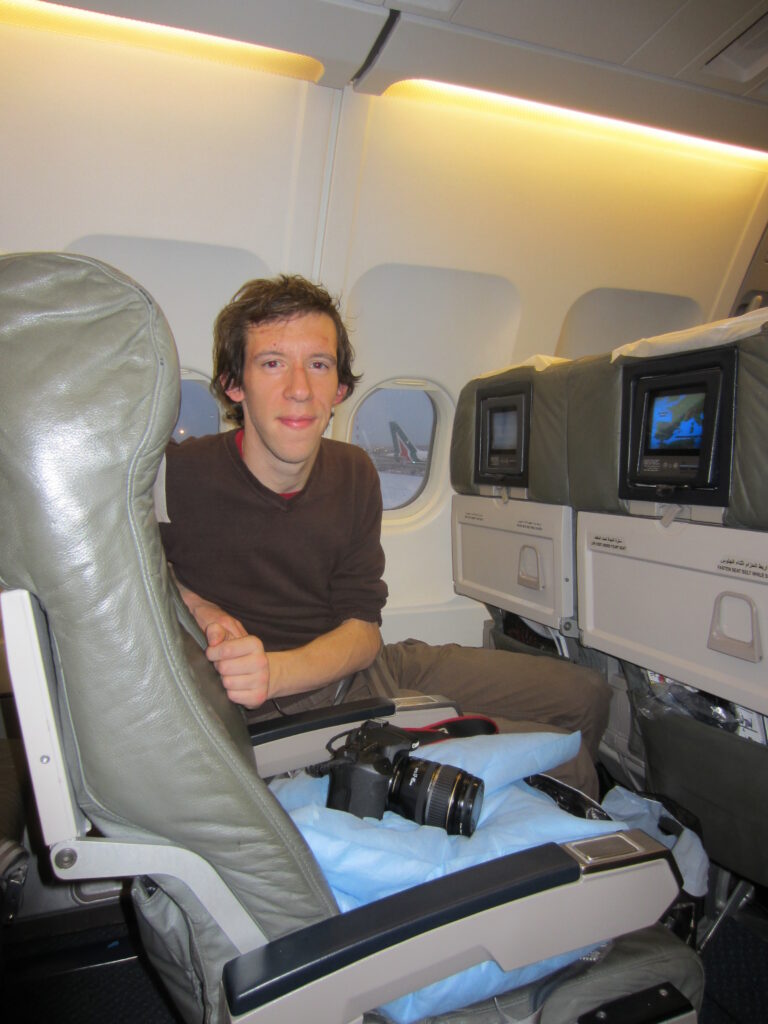
The Airbus A300-600 is where the original widebody twin-engine airliner grew up. Introduced in the early 1980s as an advanced development of the earlier A300B4, it borrowed the tail section from the A310 program, which allowed for two extra rows of seats and a noticeably better payload-range balance than its predecessor. First flying on 8 July 1983, it entered service the following year, and quickly became the more capable, more efficient version of the A300 that airlines actually wanted.
Quick stats
- ICAO type code: A306
- First flight: 8 July 1983
- Entered service: 1984
- Length: 54.08 m (177 ft 5 in)
- Wingspan: 44.84 m (147 ft 1 in)
- Engines: General Electric CF6-80C2 or Pratt & Whitney PW4000
- Typical range: up to 7,500 km (extended-range A300-600R variant)
- Cockpit crew: 2 (no flight engineer, unlike the earlier A300B4)
The biggest change wasn’t just the tail. The A300-600 dropped the flight engineer entirely, moving to a forward-facing two-person cockpit with digital EFIS avionics, a shift that mirrored what Airbus was doing across its newer aircraft at the time and helped cut operating costs for airlines running it. Power came from a choice of General Electric CF6-80C2 or Pratt & Whitney PW4000 engines, both of which went on to become some of the most widely used widebody powerplants in aviation history.
At 54.08 meters long with a 44.84 meter wingspan, the A300-600 sits in that mid-size widebody sweet spot, big enough for genuine long-haul capacity but still flyable by just two engines and two pilots. An extended-range version, the A300-600R, followed in 1987 with a fuel trim tank built into the tailplane, giving it enough legs for the transatlantic routes many operators wanted.
The type never became a global icon the way later Airbus widebodies did, but it built a loyal following, especially in cargo. Long after passenger operators moved on to newer types, the A300-600F found a second life hauling freight, and it remains a familiar sight at cargo hubs worldwide, still working decades after that first flight in 1983.