Overview
The Boeing 777-200 (B772) is the original member of Boeing’s highly successful 777 family. Introduced in the mid-1990s, it was designed to bridge the gap between the Boeing 767 and the larger 747, offering airlines a modern, fuel-efficient wide-body aircraft with excellent passenger comfort and long-range capabilities.
Powered by two high-thrust turbofan engines, the 777-200 quickly became popular with airlines around the world for both domestic trunk routes and international long-haul services. It was also the first commercial aircraft to be designed entirely using computer-aided design (CAD), marking a significant milestone in aviation history.
Although many airlines have since replaced their original 777-200s with newer variants such as the 777-300ER and 787 Dreamliner, the aircraft continues to serve passengers across the globe.
Specifications
- Manufacturer: Boeing
- First flight: June 12, 1994
- Entered service: 1995
- Length: 63.7 m (209 ft)
- Wingspan: 60.9 m (199 ft 11 in)
- Height: 18.5 m (60 ft 8 in)
- Maximum range: up to 9,700 km (5,240 nm)
- Typical seating: 305–440 passengers
- Cruising speed: Mach 0.84 (905 km/h)
- Engines: 2 × Pratt & Whitney PW4000, Rolls-Royce Trent 800 or General Electric GE90
Cabin & Passenger Experience
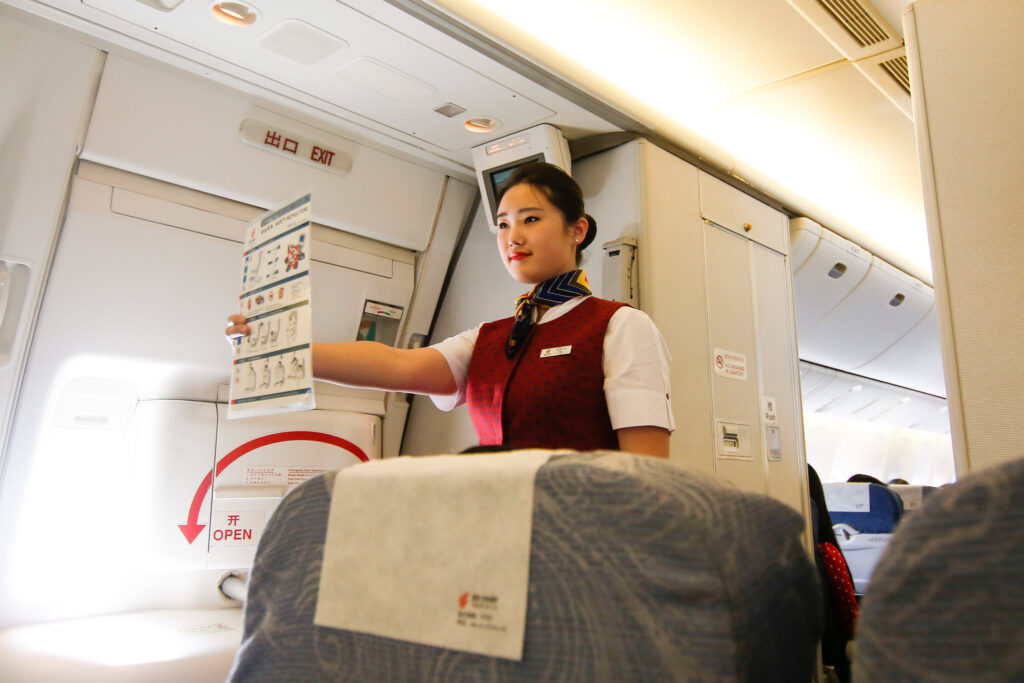
The Boeing 777-200 introduced a new standard for passenger comfort when it entered service. Its wide cabin allows for spacious seating, large overhead bins, and wider aisles than earlier twin-engine aircraft.
Many airlines originally configured the aircraft with nine seats per row (3-3-3) in Economy Class, although several later adopted a denser 3-4-3 layout. Business and First Class cabins have varied considerably depending on the airline and refurbishment programs.
The aircraft is known for its quiet cabin, smooth ride, and strong performance on both short and long-haul flights.
Operators
The Boeing 777-200 has been operated by dozens of airlines worldwide, including:
- Air China
- All Nippon Airways
- American Airlines
- British Airways
- Cathay Pacific
- Emirates
- Japan Airlines
- Korean Air
- Malaysia Airlines
- Singapore Airlines
- United Airlines
Many original operators have since retired or replaced the type with newer Boeing 777 variants or the Boeing 787 Dreamliner.
Legacy
The Boeing 777-200 transformed long-haul aviation by combining excellent fuel efficiency with high passenger capacity. Its success laid the foundation for later variants including the 777-200ER, 777-300, 777-300ER, 777F, and today’s 777X family.
More than three decades after its first flight, the 777 remains one of the world’s most successful wide-body aircraft.
My Experience
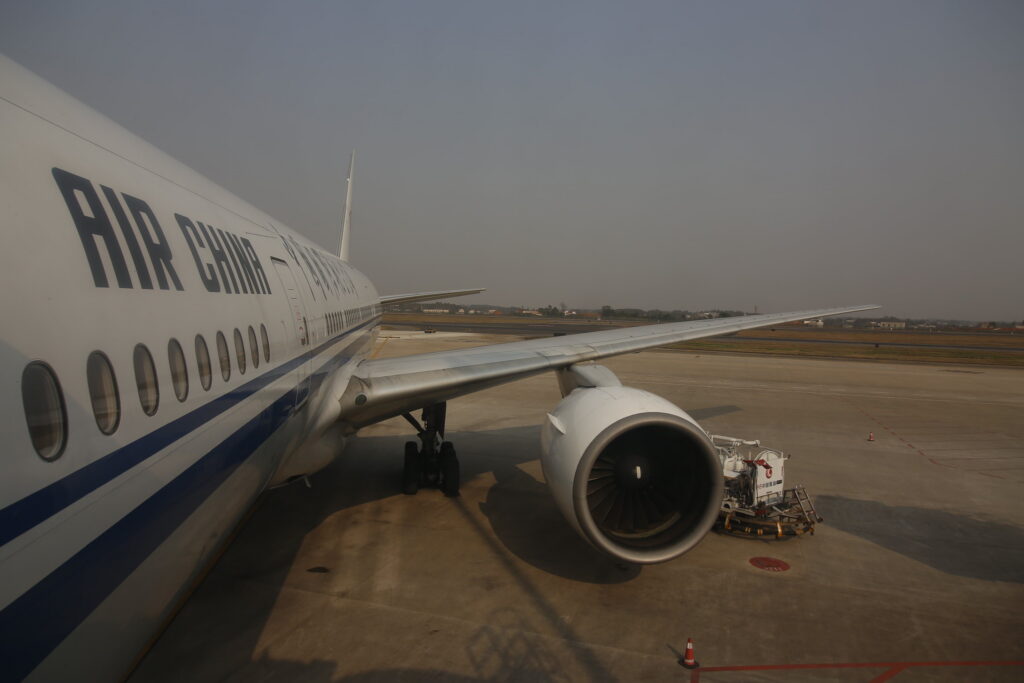
I flew on the Boeing 777-200 with Air China on 16 February 2015, operating flight CA1373 from Beijing Capital (PEK) to Changsha (CSX). The flight covered 844 miles (1,358 km) and departed at 12:35, arriving at 15:00. I flew on aircraft B-2061.
Delivered to Air China in September 2006, B-2061 has spent its entire career with the airline. Although the Boeing 777-200 was primarily designed for long-haul international routes, Air China has frequently deployed the type on high-demand domestic services, giving passengers the opportunity to experience a wide-body aircraft on relatively short flights within China.
Flying the Boeing 777-200 was a memorable experience. Despite the short journey, the aircraft offered the comfort, spacious cabin, and quiet atmosphere that have made the 777 one of the world’s most respected wide-body airliners. Experiencing this iconic aircraft on a domestic Chinese route made the flight particularly unique and remains a highlight in my flight log.