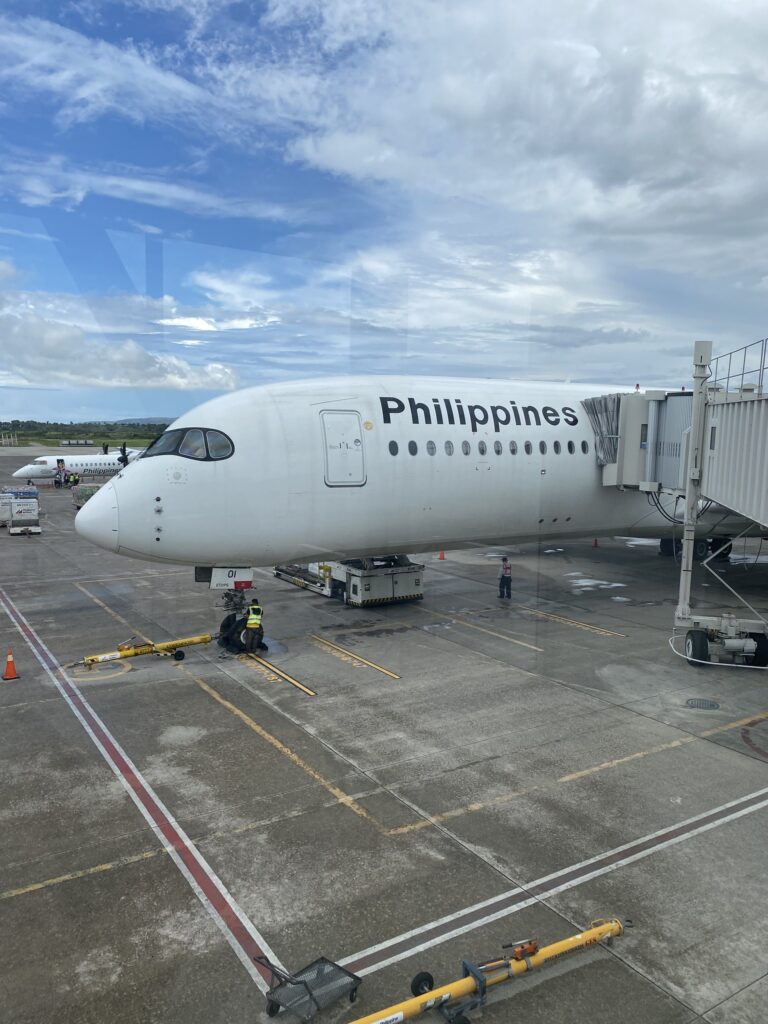
Located in the southern Philippines on the island of Mindanao, General Santos International Airport (GES/RPMR) serves as the main gateway to General Santos City, a thriving commercial hub best known as the “Tuna Capital of the Philippines.” While it is not among the country’s busiest airports, it plays a vital role in connecting Mindanao with Manila and supporting the export of fresh seafood to markets across Asia and beyond.
The airport opened in 1996, replacing the older Buayan Airport. Its modern terminal was designed with future growth in mind and is capable of handling both domestic and international operations. Although scheduled international flights are currently limited, the airport remains strategically important due to the region’s booming fishing industry and growing economy.
General Santos International features a 3,227-metre (10,587-foot) runway, making it one of the longest runways in the Philippines. This allows the airport to accommodate wide-body aircraft such as the Airbus A350, Airbus A330, and Boeing 777, even though most scheduled services are operated by narrow-body aircraft. The long runway also makes it suitable for cargo operations, particularly those transporting the city’s famous tuna.
The airport is served primarily by Philippine Airlines, Cebu Pacific, and Cebgo, offering regular connections to Manila and other Philippine destinations. Despite its relatively modest passenger numbers, the airport provides an efficient and comfortable travel experience, with spacious facilities and quick processing compared to the country’s larger airports.
My Experience
On 3 May 2025, I flew from Manila Ninoy Aquino International Airport (MNL) to General Santos International Airport (GES) on Philippine Airlines flight PR453.
- Route: Manila (MNL) → General Santos City (GES)
- Flight: PR453
- Aircraft: Airbus A350-900
- Registration: RP-C3501
- Airline: Philippine Airlines
- Flight time: 2 hours 10 minutes
- Seat: (not recorded)
Flying a Philippine Airlines Airbus A350-900 on a domestic route was a real highlight. Wide-body aircraft are relatively uncommon on domestic services, making the journey feel more like an international long-haul flight than a typical domestic hop. The spacious cabin, quieter ride, and improved comfort made the flight especially enjoyable.
Arriving in General Santos also marked my first visit to the city, which is renowned for its seafood industry, bustling fish market, and as the hometown of legendary boxer Manny Pacquiao. The airport provided a relaxed arrival experience and served as an excellent introduction to one of Mindanao’s most important cities.
For aviation enthusiasts, General Santos is an interesting destination because it combines a relatively quiet airport with infrastructure capable of handling some of the world’s largest passenger aircraft. It’s a reminder that an airport’s importance is not always measured by passenger numbers alone but also by its role in supporting regional trade and economic development.