The Airbus A300B2 (ICAO: A30B) was the first production version of the Airbus A300 and the aircraft that launched Airbus as a major player in commercial aviation. Entering service in 1974, it became the world’s first twin-engine wide-body airliner, introducing a new era of more efficient medium- and long-haul air travel. The success of the A300B2 laid the foundation for every Airbus aircraft that followed.
History
The A300 programme was launched in 1969 as a joint European project between France and Germany, later joined by Spain and the United Kingdom. The goal was to create a modern wide-body aircraft capable of competing with American manufacturers while offering lower operating costs through its twin-engine design.
The first production aircraft, the A300B2, made its maiden flight in 1973 and entered commercial service with Air France on 23 May 1974, operating flights between Paris and London. Although early sales were slow, the aircraft gradually gained the confidence of airlines around the world and established Airbus as a serious competitor to Boeing and McDonnell Douglas.
Design
The Airbus A300B2 featured a spacious twin-aisle cabin designed for short- and medium-haul routes with high passenger demand. Its wide fuselage accommodated up to eight seats per row, while its cargo hold was designed to carry standard LD3 containers, a feature that influenced every subsequent Airbus wide-body.
The aircraft was powered by two high-bypass turbofan engines from General Electric or Pratt & Whitney and was operated by a three-person flight crew, including a flight engineer. Later Airbus models would evolve into fully digital two-pilot cockpits, but the A300B2 represented an important technological step towards that future.
Specifications
| Specification | Airbus A300B2 |
|---|---|
| Manufacturer | Airbus |
| ICAO Code | A30B |
| First Flight | 28 October 1972 (A300 programme) |
| Entry into Service | 23 May 1974 |
| Length | 53.61 m |
| Wingspan | 44.84 m |
| Height | 16.62 m |
| Typical Seating | 250–266 passengers |
| Maximum Seating | Up to 345 passengers |
| Range | Up to 5,400 km (2,900 nm) |
| Cruising Speed | Mach 0.78 (approximately 840 km/h) |
| Engines | 2 × General Electric CF6 or Pratt & Whitney JT9D |
| Flight Crew | 3 |
Variants
A300B2-100
The original production version with a range suited for high-density domestic and regional routes.
A300B2-200
An improved version offering increased maximum take-off weight and enhanced performance, becoming the most common B2 variant.
A300B2-320
Powered by Pratt & Whitney JT9D engines instead of the General Electric CF6, allowing airlines greater engine choice.
Operators
The Airbus A300B2 was flown by airlines across Europe, Asia, Africa, and the Middle East. Notable operators included:
- Air France
- Lufthansa
- Iran Air
- Indian Airlines
- South African Airways
- Thai Airways International
- Korean Air
- Tunisair
Most A300B2 aircraft have now been retired, although a small number continued operating in cargo and government roles for many years after leaving passenger service.
Legacy
The Airbus A300B2 was far more than simply Airbus’ first aircraft—it was the beginning of one of aviation’s greatest success stories. As the world’s first twin-engine wide-body airliner, it demonstrated that airlines could operate large aircraft more efficiently while maintaining passenger comfort.
Its innovative design, efficient operation, and commercial success paved the way for later Airbus aircraft including the A310, A330, A340, A350, and even the A380. The A300B2 remains one of the most significant aircraft in the history of commercial aviation and the foundation upon which Airbus built its global success.
My Experience
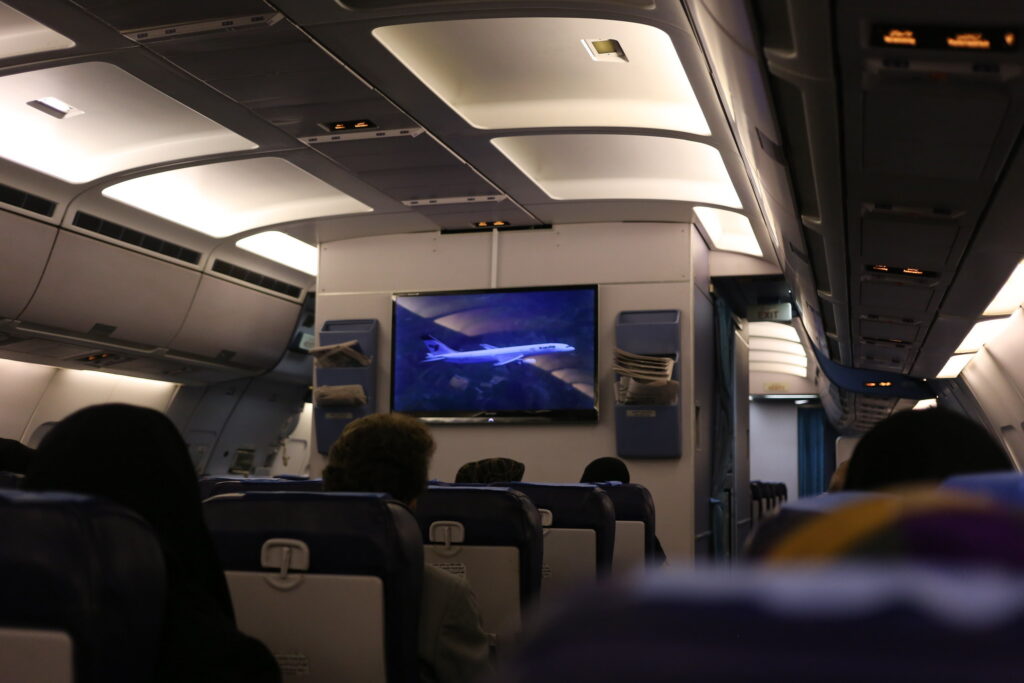
I flew on the Airbus A300B2 with Iran Air on flight IR409 from Tehran Mehrabad (THR) to Bushehr (BUZ) in 2013. The flight was operated by EP-IBZ, an Airbus A300B2-203, and I was seated in 15G. Lasting approximately 1 hour and 20 minutes, it was a memorable opportunity to experience one of Airbus’ earliest wide-body aircraft in regular passenger service. Flying aboard this classic A300 remains one of the highlights of my aviation travels.