Australia vs New Zealand: Why Their Flags Look So Similar

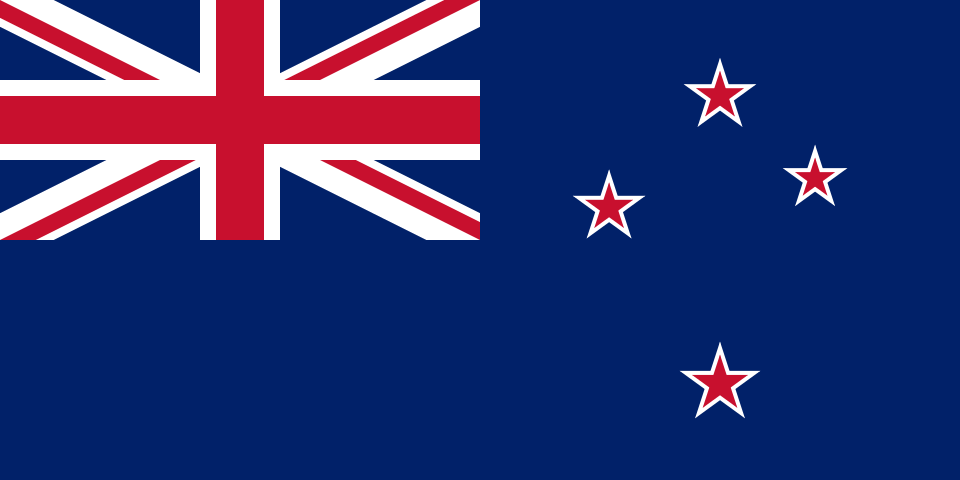
If you’ve ever mixed up the Australian and New Zealand flags, you’re in good company. Both are dark blue, both carry the Union Jack in the top corner, and both feature the Southern Cross. The resemblance isn’t an accident. It comes from a shared origin as British colonies flying the Blue Ensign, the naval flag reserved for government vessels, with each territory required to add its own symbol to mark it as theirs.
New Zealand got there first. Its flag design goes back to 1869, originally created for colonial government ships, and became the official national flag in 1902. Australia’s flag came later, the winning entry in a design competition held in 1901 after the six colonies federated into a single nation.
The easiest way to tell them apart is to look at the stars. New Zealand’s flag has four red stars outlined in white, each with five points, representing the brightest stars of the Southern Cross. Australia’s has six stars, all white: five make up the Southern Cross (four with seven points, one smaller with five), and a sixth, larger star sits below the Union Jack on its own. That’s the Commonwealth Star, added to represent the federation of the six original states, with a seventh point added in 1908 to include Australia’s territories. New Zealand’s flag has no equivalent star at all.
Color is the fastest tell at a glance. Red stars, it’s New Zealand. White stars with an extra star under the Union Jack, it’s Australia.
New Zealand has actually had the chance to change its flag and turned it down. A two-part referendum in 2015 and 2016 asked the public to choose between the current design and a proposed alternative featuring a silver fern. The country voted to keep what it had, by a clear margin.
So the resemblance isn’t going anywhere. Two nations, one shared colonial template, and just enough stars to tell them apart if you know where to look.