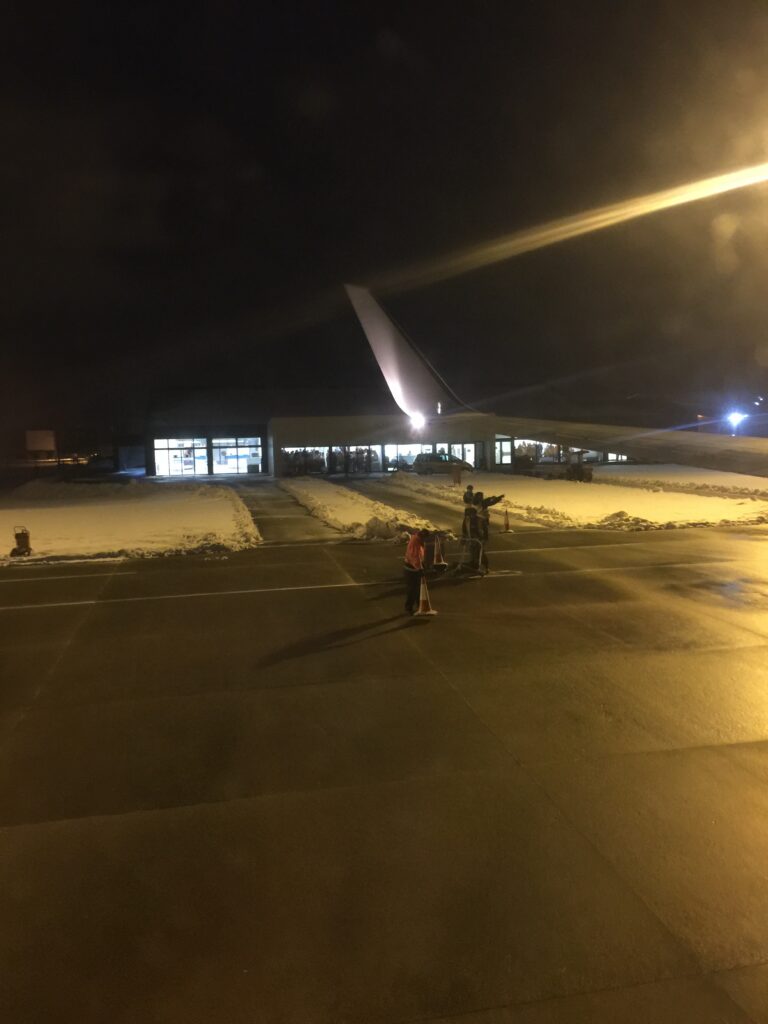
Banja Luka International Airport (IATA: BNX, ICAO: LQBK), also known as Mahovljani Airport, is the second-busiest airport in Bosnia and Herzegovina and serves the city of Banja Luka, the administrative centre of Republika Srpska. Located approximately 23 km north of the city centre, the airport has grown rapidly in recent years thanks to the expansion of low-cost carriers, making it an increasingly important gateway to the western Balkans.
History
Construction of the airport began in 1976, with the intention of serving domestic traffic within the former Yugoslavia. Following the Bosnian War, the airport gained strategic importance as Banja Luka became the de facto capital of Republika Srpska.
Civilian operations officially started on 18 November 1997. Between 1999 and 2003, the airport served as the hub of Air Srpska, before the airline ceased operations. Since then, the airport has gradually attracted new airlines through government support and infrastructure improvements, including upgrades completed before the visit of Pope John Paul II in 2003.
Airport Facilities
Despite its relatively modest size, BNX offers modern facilities capable of handling medium-sized aircraft such as the Airbus A320 and Boeing 737 families.
Quick Facts
| Feature | Information |
|---|---|
| IATA | BNX |
| ICAO | LQBK |
| Elevation | 122 m (400 ft) |
| Runway | 17/35 |
| Runway Length | 2,500 m |
| Surface | Asphalt / Concrete |
| Airport Category | International |
| Distance from Banja Luka | Approximately 23 km |
The airport has four aircraft parking stands, CAT I instrument landing capability on Runway 17, Jet A-1 fuel, de-icing equipment and rescue services up to ICAO Category VII upon request.
Airlines and Destinations
Banja Luka has become one of the fastest-growing airports in Bosnia and Herzegovina thanks to low-cost airlines.
Scheduled airlines include:
- Ryanair
- Wizz Air
- Air Serbia
During the summer season, charter flights connect Banja Luka with popular holiday destinations in Greece and Turkey.
Passenger Growth
Passenger traffic has increased dramatically over the past decade.
- 2011: around 8,000 passengers
- 2023: over 460,000 passengers
- 2025: nearly 485,000 passengers, making it one of the busiest airports in the country.
The airport’s expansion has largely been driven by Ryanair’s arrival in 2018, followed by Wizz Air in 2021, opening numerous direct routes across Europe.
Ground Transportation
The airport is located near the Laktaši municipality and is easily accessible via the motorway network connecting Banja Luka, Gradiška, and Doboj. Airport shuttle buses, taxis and rental cars provide connections to Banja Luka city centre and surrounding regions.
Why It Matters
Although considerably smaller than Sarajevo Airport, Banja Luka has carved out a niche as Bosnia and Herzegovina’s leading low-cost airport. Its convenient location, growing route network and efficient terminal make it an attractive gateway for both tourists and the Bosnian diaspora. Continued cooperation with airlines such as Ryanair, Wizz Air and Air Serbia suggests the airport will remain an important player in regional aviation.
Airport Information
- Name: Banja Luka International Airport
- IATA: BNX
- ICAO: LQBK
- Location: Mahovljani, Bosnia and Herzegovina
- Coordinates: 44°56′29″N 17°17′51″E
- Runway: 17/35 – 2,500 m
- Elevation: 122 m (400 ft)
My Experience
I visited Banja Luka International Airport on 25 January 2019, flying with Ryanair from Brussels South Charleroi Airport (CRL). The flight, FR2383, was operated by a Boeing 737-800 (EI-DYZ), departing Charleroi at 15:25 and arriving in Banja Luka at 17:30 after a flight time of 2 hours and 5 minutes. I was seated in 31F, giving me a window view of the approach into northern Bosnia and Herzegovina.
This was my first visit to Banja Luka Airport, and I found it to be a compact and efficient regional airport. Despite its small size, the airport offered a smooth arrival experience and served as an excellent gateway to explore Republika Srpska and the wider region. Ryanair’s services have significantly improved connectivity between Banja Luka and Western Europe, making the destination much more accessible for travellers like myself.