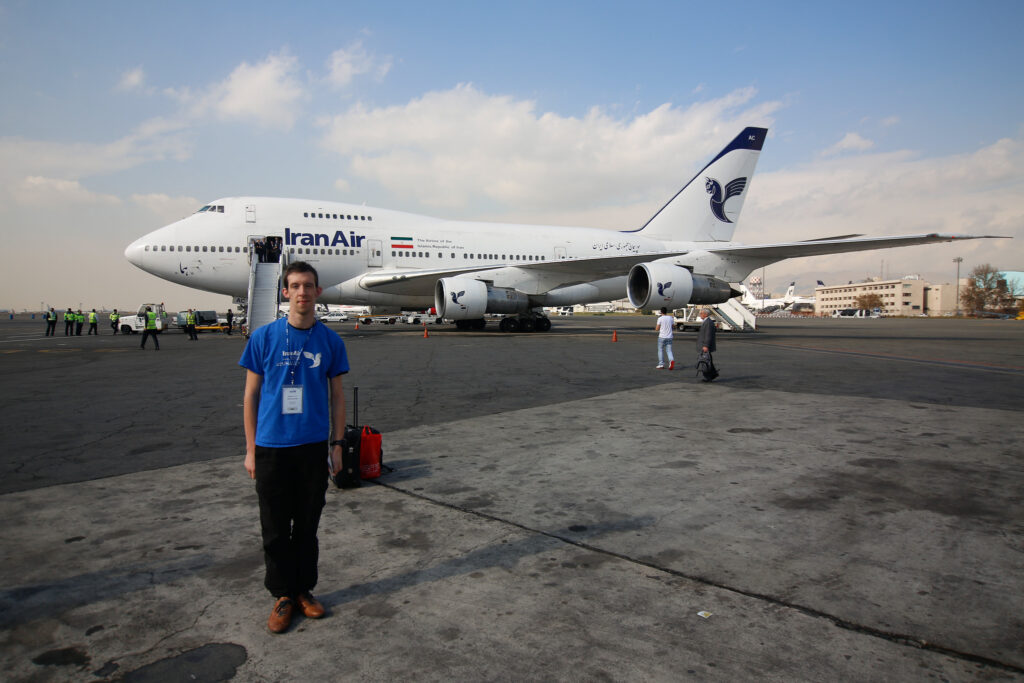
The Boeing 747SP (IATA: B74S), with SP standing for Special Performance, is one of the most distinctive members of the Boeing 747 family. Developed as a shortened, ultra-long-range version of the original 747, it was designed to operate non-stop flights on routes that were beyond the reach of most airliners of its era. Its shorter fuselage, larger tail, and lighter weight gave it exceptional performance, allowing airlines to connect distant cities long before modern twin-engine aircraft existed.
Although only 45 aircraft were built, the 747SP became an aviation icon thanks to its unique appearance and its role in pioneering some of the world’s longest flights.
At a Glance
- Manufacturer: Boeing
- IATA Code: B74S
- ICAO Code: B74S
- Meaning: Special Performance
- First Flight: 4 July 1975
- Entered Service: 25 April 1976 with Pan Am
- Production: 1976–1989
- Aircraft Built: 45
- Typical Passenger Capacity: 230–315 passengers
- Maximum Range: Up to 12,320 km (6,650 nautical miles)
- Engines: Four turbofan engines
- Cruising Speed: Mach 0.88
Development
During the early 1970s, airlines wanted an aircraft capable of flying extremely long routes without the size and capacity of a standard Boeing 747. Pan Am and Iran Air were among the airlines requesting such an aircraft, particularly for long-distance services between North America, the Middle East, and Asia.
Instead of creating an entirely new design, Boeing shortened the fuselage of the 747-100 while keeping the same wing and powerful four-engine configuration. The lighter airframe dramatically improved range and climb performance, giving birth to the 747SP.
Design Features
The Boeing 747SP is instantly recognizable because of its unusual proportions.
Key features include:
- Significantly shorter fuselage than other 747 variants.
- Larger vertical tail for improved stability.
- Extended horizontal stabilizers.
- Four powerful turbofan engines.
- Classic Boeing 747 upper deck.
- Excellent takeoff and climb performance.
Despite being nearly 14 metres shorter than later 747 variants, the aircraft retained the unmistakable profile of the “Queen of the Skies.”
Passenger Experience
Passengers enjoyed the same spacious wide-body cabin found on larger Boeing 747s, but with fewer seats and a quieter atmosphere.
Features included:
- Twin-aisle cabin.
- Spacious seating layouts.
- Comfortable long-haul experience.
- Upper deck premium seating.
- Excellent range allowing fewer fuel stops.
For many travellers during the late 1970s and 1980s, the 747SP offered the fastest and most convenient way to travel between continents.
Operators
The Boeing 747SP served airlines around the world, including:
- Pan Am
- Iran Air
- South African Airways
- Qantas
- United Airlines
- Syrian Air
- China Airlines
- Korean Air
- Pakistan International Airlines (PIA)
- Yemenia
Several aircraft were also converted for government and VIP transport.
Special Missions
Perhaps the most famous 747SP was SOFIA (Stratospheric Observatory for Infrared Astronomy), a heavily modified aircraft carrying a 2.5-metre infrared telescope. Operated jointly by NASA and the German Aerospace Center (DLR), SOFIA conducted astronomical research from the stratosphere for more than a decade before retiring in 2022.
Other surviving aircraft continue to serve as engine testbeds or VIP transports.
Legacy
Although sales were lower than Boeing originally expected, the 747SP proved that ultra-long-haul travel was commercially possible. It enabled airlines to operate routes that were previously impossible without fuel stops and paved the way for future long-range aircraft such as the Boeing 777-200LR and Boeing 787 Dreamliner.
Today, the 747SP remains one of the rarest and most recognizable Boeing aircraft ever built.
Technical Specifications
| Specification | Boeing 747SP |
|---|---|
| Manufacturer | Boeing |
| IATA Code | B74S |
| ICAO Code | B74S |
| Length | 56.31 m |
| Wingspan | 59.64 m |
| Height | 20.06 m |
| Maximum Takeoff Weight | 304,000 kg |
| Maximum Range | 12,320 km |
| Cruising Speed | Mach 0.88 |
| Engines | 4 × Pratt & Whitney JT9D or Rolls-Royce RB211 turbofans |
| Typical Seating | 230–315 passengers |
| First Flight | 4 July 1975 |
| Entry into Service | 25 April 1976 |
| Aircraft Built | 45 |
Fun Facts
- SP stands for Special Performance.
- The 747SP is the shortest production variant of the Boeing 747 family.
- It was the highest-flying subsonic passenger airliner, with a certified service ceiling of 45,100 feet (13,747 metres).
- Only 45 aircraft were built, making it one of the rarest Boeing wide-body airliners.
- Its distinctive short fuselage earned it the nickname “Baby Jumbo” among aviation enthusiasts.