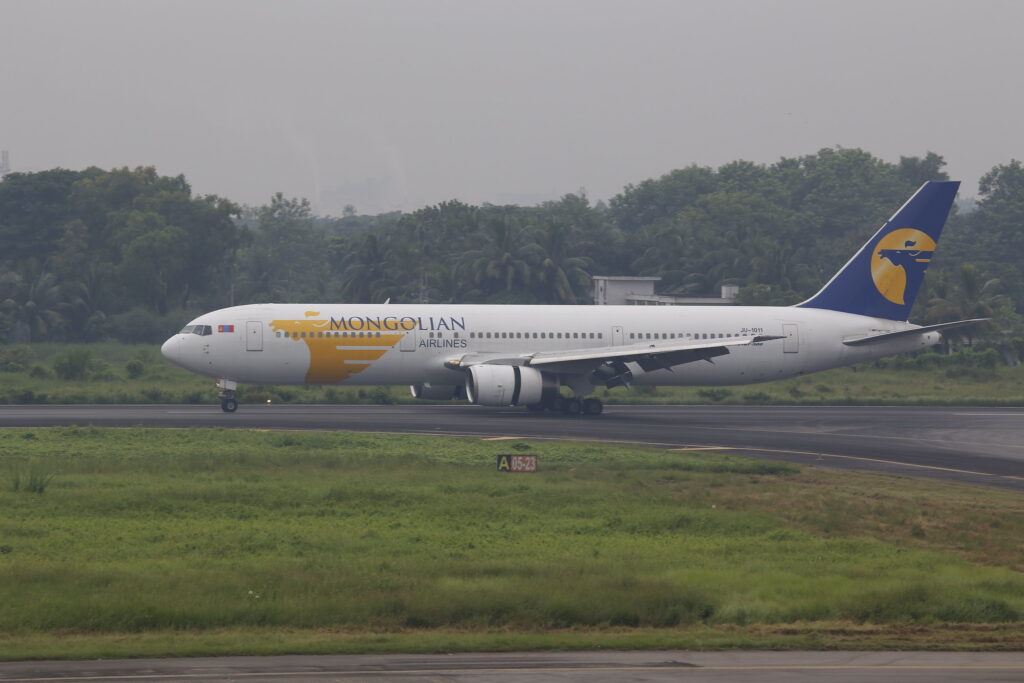
The Boeing 767-300ER (ICAO: B763) is the extended-range version of the Boeing 767-300 and one of the most successful wide-body aircraft ever built. Combining long-haul capability with excellent fuel efficiency, it became a favourite among airlines operating transatlantic and intercontinental routes. Since entering service in 1988, the 767-300ER has connected cities around the world and remains an important aircraft for both passenger and cargo operations.
History
Following the success of the original 767-200 and stretched 767-300, Boeing introduced the 767-300ER (Extended Range) to meet growing demand for longer non-stop flights. The aircraft made its first flight in 1986 and entered commercial service with American Airlines in 1988.
Its increased fuel capacity, higher maximum take-off weight, and improved performance allowed airlines to fly routes previously requiring larger or less efficient aircraft. Throughout the 1990s and 2000s, the 767-300ER became one of the world’s leading aircraft for transatlantic services.
Design
The Boeing 767-300ER retains the comfortable wide-body cabin of the 767 family while offering a longer fuselage and significantly greater range. Its popular 2-3-2 economy seating layout provides passengers with fewer middle seats than most other wide-body aircraft.
Powered by two high-bypass turbofan engines from General Electric, Pratt & Whitney, or Rolls-Royce, the aircraft delivers reliable long-haul performance while maintaining relatively low operating costs. It was also one of the first aircraft to benefit from widespread ETOPS certification, allowing efficient twin-engine operations across oceans.
Specifications
| Specification | Boeing 767-300ER |
|---|---|
| Manufacturer | Boeing |
| ICAO Code | B763 |
| First Flight | 30 January 1986 |
| Entry into Service | 1988 |
| Length | 54.94 m |
| Wingspan | 47.57 m |
| Height | 15.85 m |
| Typical Seating | 218–269 passengers |
| Maximum Seating | Up to 351 passengers |
| Range | Up to 11,070 km (5,980 nm) |
| Cruising Speed | Mach 0.80 (approximately 850 km/h) |
| Engines | 2 × General Electric CF6, Pratt & Whitney PW4000 or Rolls-Royce RB211 |
| Flight Crew | 2 |
Variants
Boeing 767-300ER
The standard extended-range passenger version and by far the most popular member of the 767 family.
Boeing 767-300BCF
The Boeing Converted Freighter (BCF) programme converts retired passenger aircraft into dedicated cargo aircraft for express freight and logistics operators.
Boeing 767-300BDSF
A cargo conversion developed by Israel Aerospace Industries (IAI), widely used by international cargo airlines.
Operators
The Boeing 767-300ER has been operated by airlines across every continent. Major operators have included:
- American Airlines
- Delta Air Lines
- United Airlines
- Air Canada
- Japan Airlines
- All Nippon Airways
- LATAM Airlines
- Ethiopian Airlines
- Air Astana
- Icelandair
Many passenger aircraft remain in service today, while numerous retired examples have found a second life as freighters with cargo airlines around the world.
Legacy
The Boeing 767-300ER is regarded as one of Boeing’s greatest commercial successes. Its combination of range, efficiency, reliability, and passenger comfort made it the backbone of many airlines’ long-haul fleets for more than three decades.
Even as newer aircraft such as the Boeing 787 Dreamliner gradually replace it on passenger routes, the 767-300ER continues to play a vital role in global aviation. Its proven design ensures it will remain a familiar sight in both passenger and cargo operations for many years to come.