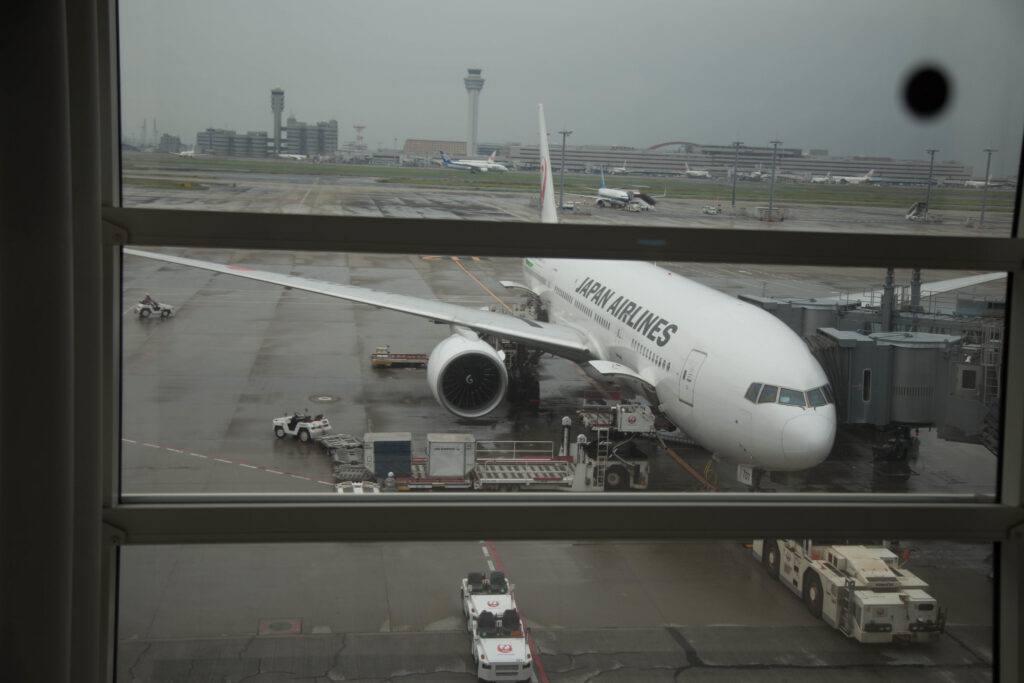
The Boeing 777-200ER (ICAO: B77E) is the extended-range version of the original Boeing 777-200 and one of the most successful long-haul airliners ever built. Designed to connect cities across continents with greater efficiency than previous wide-body aircraft, the 777-200ER became a favourite among airlines for its impressive range, reliability, and passenger comfort. Since entering service in 1997, it has operated thousands of long-haul flights every day and remains an important part of many airline fleets.
History
Following the success of the original Boeing 777-200, Boeing introduced the 777-200ER (Extended Range) to meet airlines’ growing demand for longer non-stop flights. Featuring increased fuel capacity and a higher maximum take-off weight, the aircraft was capable of operating routes across the Atlantic, Pacific, and Indian Oceans.
The Boeing 777-200ER made its first flight in 1996 and entered commercial service with British Airways in 1997. Throughout the late 1990s and 2000s, it became one of the world’s most popular long-haul aircraft, replacing older four-engine aircraft such as the Boeing 747-100/200 and McDonnell Douglas DC-10 on many routes.
Design
The Boeing 777-200ER introduced several innovations that set new standards for commercial aviation. It was the world’s largest twin-engine airliner at the time of its introduction and featured a fully digital fly-by-wire flight control system, advanced avionics, and an exceptionally spacious cabin.
Depending on airline configuration, the aircraft typically features 3-3-3 or 3-4-3 seating in economy class, while offering modern premium cabins for long-haul travel. It is powered by a choice of General Electric GE90, Pratt & Whitney PW4000, or Rolls-Royce Trent 800 engines.
Specifications
| Specification | Boeing 777-200ER |
|---|---|
| Manufacturer | Boeing |
| ICAO Code | B77E |
| First Flight | 6 October 1996 |
| Entry into Service | 1997 |
| Length | 63.73 m |
| Wingspan | 60.93 m |
| Height | 18.52 m |
| Typical Seating | 301–314 passengers |
| Maximum Seating | Up to 440 passengers |
| Range | Up to 13,080 km (7,065 nm) |
| Cruising Speed | Mach 0.84 (approximately 905 km/h) |
| Engines | 2 × GE90, Pratt & Whitney PW4000, or Rolls-Royce Trent 800 |
| Flight Crew | 2 |
Operators
The Boeing 777-200ER has been operated by airlines around the globe. Major operators have included:
- British Airways
- Emirates
- Air France
- KLM
- United Airlines
- American Airlines
- Japan Airlines
- All Nippon Airways
- Singapore Airlines
- Qatar Airways
- EgyptAir
- Ethiopian Airlines
Many aircraft continue to operate on long-haul routes, while others have been converted or are gradually being replaced by newer aircraft such as the Boeing 787 Dreamliner and Airbus A350.
Legacy
The Boeing 777-200ER revolutionised long-haul travel by proving that large twin-engine aircraft could efficiently replace older three- and four-engine jets on intercontinental routes. Its outstanding reliability, range, and passenger comfort made it one of Boeing’s greatest commercial successes.
Even decades after its introduction, the 777-200ER remains a cornerstone of global aviation, serving airlines and passengers on some of the world’s busiest and longest routes.
My Experience
I flew on the Boeing 777-200ER with Japan Airlines on 1 October 2016, travelling on flight JL29 from Tokyo Haneda (HND) to Hong Kong (HKG). The flight was operated by JA707J, covering a distance of approximately 1,806 miles (2,907 km).
Flying with Japan Airlines was a memorable experience, with the airline’s renowned service complementing one of Boeing’s most successful long-haul aircraft. The Boeing 777-200ER offered a quiet cabin, a smooth flight, and excellent comfort, making this journey between Japan and Hong Kong a highlight of my aviation travels.