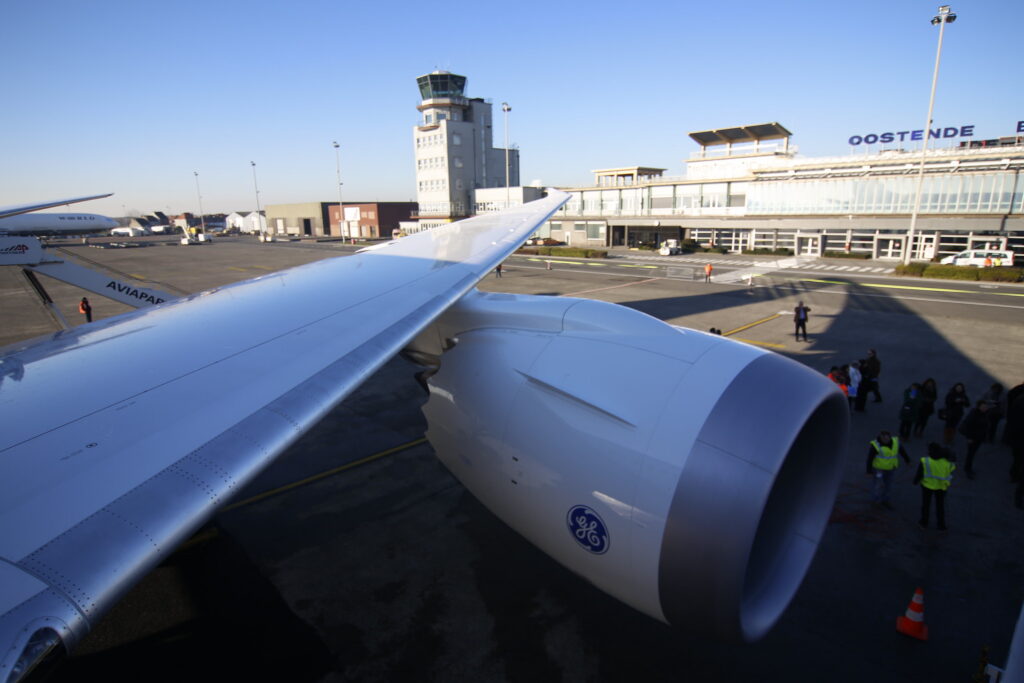
The Boeing 787-8 Dreamliner (ICAO: B788) is the first member of the revolutionary Boeing 787 family. Designed to replace older mid-sized wide-body aircraft such as the Boeing 767 and Airbus A330, it introduced a new generation of fuel-efficient, long-range airliners. With its extensive use of composite materials, advanced aerodynamics, and passenger-focused cabin design, the 787-8 transformed long-haul travel and remains one of the most innovative commercial aircraft in service.
History
The Boeing 787 programme was launched in 2004 as the 7E7, with the goal of creating a highly efficient aircraft capable of opening new long-haul routes that were previously uneconomical. Despite production delays, the Dreamliner made its maiden flight on 15 December 2009.
The 787-8 entered commercial service with All Nippon Airways (ANA) on 26 October 2011, becoming the world’s first airliner built primarily from carbon-fibre composite materials. The aircraft quickly gained popularity with airlines thanks to its excellent fuel efficiency and operational flexibility.
Design
Approximately 50% of the Boeing 787-8’s structure is made from lightweight composite materials, significantly reducing weight while improving durability and fuel efficiency. The aircraft also features advanced aerodynamics, raked wingtips, and highly efficient engines.
Passengers benefit from one of the most modern cabins in commercial aviation. The Dreamliner features larger electronically dimmable windows, improved cabin humidity, lower cabin altitude, LED mood lighting, quieter engines, and spacious overhead bins, all designed to reduce fatigue on long-haul flights.
The aircraft is powered by either the General Electric GEnx-1B or Rolls-Royce Trent 1000 engines.
Specifications
| Specification | Boeing 787-8 Dreamliner |
|---|---|
| Manufacturer | Boeing |
| ICAO Code | B788 |
| First Flight | 15 December 2009 |
| Entry into Service | 26 October 2011 |
| Length | 56.72 m |
| Wingspan | 60.12 m |
| Height | 16.92 m |
| Typical Seating | 210–248 passengers |
| Maximum Seating | Up to 359 passengers |
| Range | Up to 13,620 km (7,355 nm) |
| Cruising Speed | Mach 0.85 (approximately 913 km/h) |
| Engines | 2 × General Electric GEnx-1B or Rolls-Royce Trent 1000 |
| Flight Crew | 2 |
Operators
The Boeing 787-8 is operated by airlines around the world, including:
- All Nippon Airways (ANA)
- Japan Airlines
- Qatar Airways
- British Airways
- American Airlines
- United Airlines
- Air India
- Ethiopian Airlines
- LOT Polish Airlines
- Royal Air Maroc
- Kenya Airways
- TUI Airways
Many airlines use the 787-8 to serve long, thin routes that would not be economically viable with larger wide-body aircraft.
Legacy
The Boeing 787-8 marked a major turning point in commercial aviation. Its advanced composite construction, lower fuel consumption, and improved passenger comfort set new industry standards and influenced the design of future aircraft, including the Airbus A350.
More than a decade after entering service, the Boeing 787-8 remains one of the world’s most efficient and versatile long-haul aircraft. It continues to connect cities across the globe while offering passengers a quieter, more comfortable, and more environmentally efficient flying experience.
My Experience
One of my most unusual flights on the Boeing 787-8 Dreamliner was aboard TUI fly Belgium on aircraft OO-JDL. Although the flight was only between Brussels (BRU) and Ostend (OST), it offered the rare opportunity to experience one of the world’s most advanced long-haul aircraft on an exceptionally short domestic sector.
Flights like these are uncommon, as the Boeing 787-8 is normally used on intercontinental routes. Seeing a Dreamliner operating within Belgium made the journey particularly memorable. Despite the short flight time, it was a unique addition to my flight log and a reminder that even the briefest flights can become special experiences for an aviation enthusiast.