The Boeing 787-9 Dreamliner (ICAO: B789) is the second and most successful member of the Boeing 787 family. Building on the success of the 787-8, it offers a longer fuselage, greater passenger capacity, and increased range while maintaining the Dreamliner’s renowned fuel efficiency and passenger comfort. Since entering service in 2014, the 787-9 has become one of the world’s most popular long-haul aircraft.
History
Boeing launched the 787-9 to provide airlines with greater flexibility on long-haul routes. Compared with the 787-8, it carries more passengers while flying farther, making it an attractive replacement for older aircraft such as the Boeing 767-300ER, Airbus A330-300, and even some Boeing 777-200 variants.
The aircraft made its first flight on 17 September 2013 and entered commercial service with All Nippon Airways (ANA) on 7 August 2014. Since then, it has become the best-selling variant of the Dreamliner family.
Design
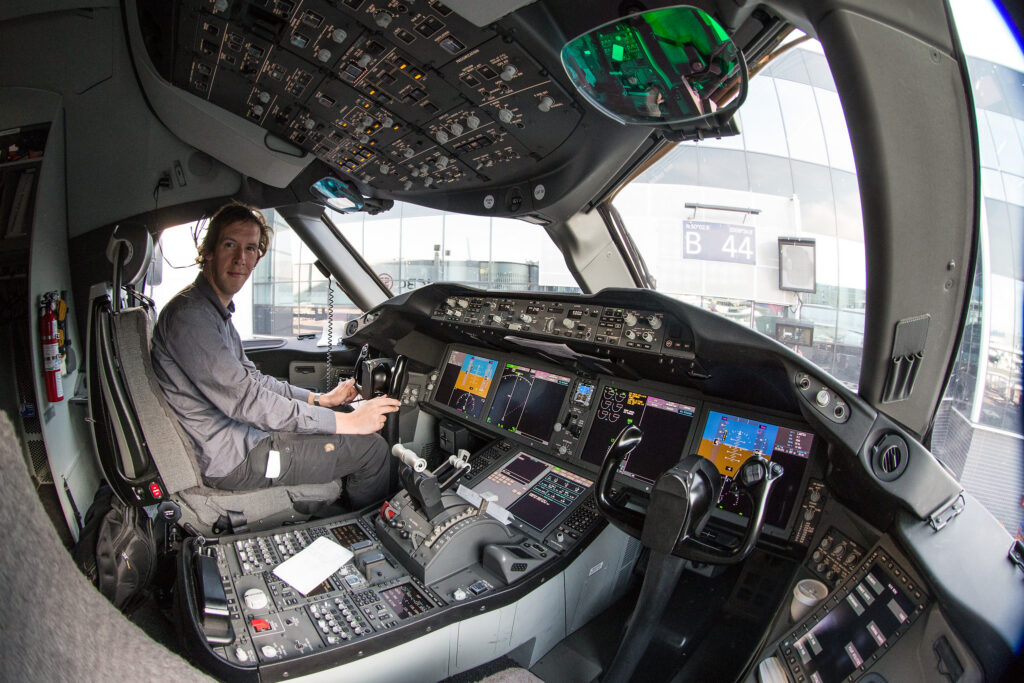
The Boeing 787-9 shares the same advanced technologies as the other Dreamliner models, including a lightweight carbon-fibre composite structure, fly-by-wire controls, raked wingtips, and highly efficient engines.
Passengers enjoy larger electronically dimmable windows, improved cabin humidity, a lower cabin altitude, quieter engines, LED mood lighting, and spacious overhead bins. These features help reduce fatigue, particularly on ultra-long-haul flights.
The aircraft is powered by either the General Electric GEnx-1B or Rolls-Royce Trent 1000 engines, delivering excellent fuel efficiency and lower emissions than previous-generation wide-body aircraft.
Specifications
| Specification | Boeing 787-9 Dreamliner |
|---|---|
| Manufacturer | Boeing |
| ICAO Code | B789 |
| First Flight | 17 September 2013 |
| Entry into Service | 7 August 2014 |
| Length | 62.81 m |
| Wingspan | 60.12 m |
| Height | 17.02 m |
| Typical Seating | 280–296 passengers |
| Maximum Seating | Up to 420 passengers |
| Range | Up to 14,140 km (7,635 nm) |
| Cruising Speed | Mach 0.85 (approximately 913 km/h) |
| Engines | 2 × General Electric GEnx-1B or Rolls-Royce Trent 1000 |
| Flight Crew | 2 |
Operators
The Boeing 787-9 is flown by airlines across every continent. Major operators include:
- All Nippon Airways (ANA)
- Japan Airlines
- British Airways
- United Airlines
- American Airlines
- Air Canada
- Etihad Airways
- Qatar Airways
- Air New Zealand
- KLM
- Vietnam Airlines
- Saudia
- Virgin Atlantic
- WestJet
- Ethiopian Airlines
The aircraft is used on a wide variety of routes, from medium-haul regional services to some of the world’s longest scheduled flights.
Legacy
The Boeing 787-9 has become the flagship variant of the Dreamliner family thanks to its excellent balance of capacity, range, and operating efficiency. It enables airlines to open new long-haul routes while offering passengers a quieter and more comfortable flying experience.
Today, the 787-9 is one of the most important aircraft in global aviation and continues to shape the future of long-distance air travel with its versatility, reliability, and innovative design.
My Experience
I have flown on the Boeing 787-9 Dreamliner with two different airlines, experiencing the aircraft on both European and intercontinental routes.
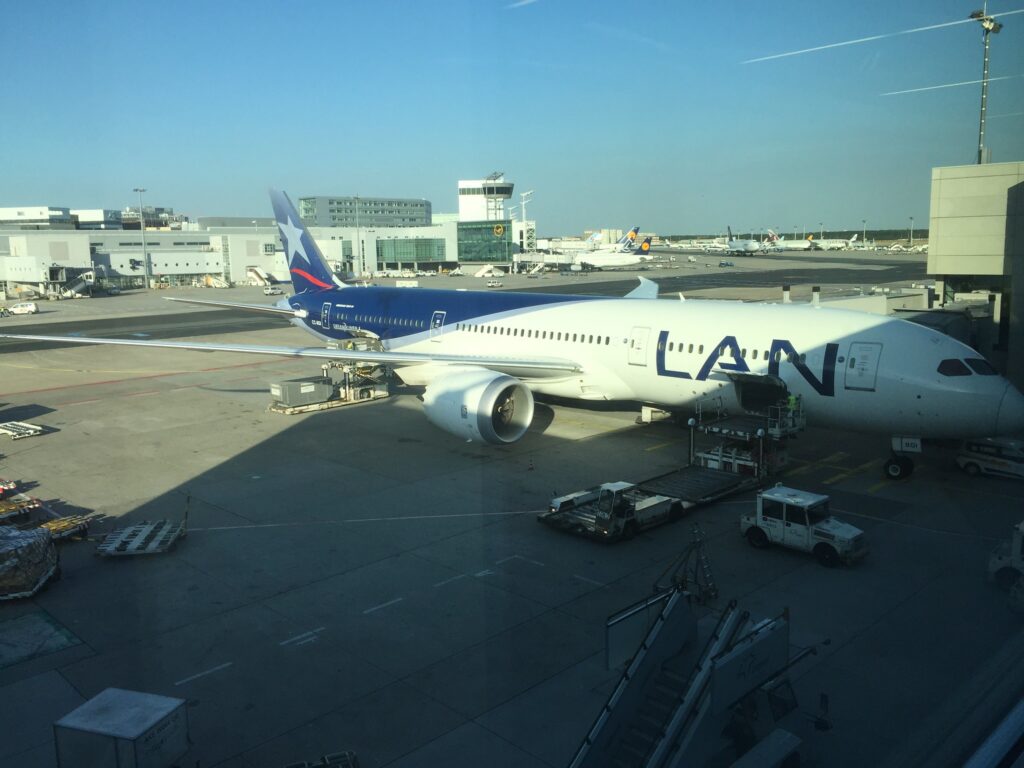
My first flight on the type was with LATAM Airlines on 11 September 2016, travelling aboard CC-BGI between Madrid (MAD) and Frankfurt (FRA). This was a rare opportunity to fly a South American airline entirely within Europe, as the flight formed part of one of LATAM’s long-haul services. It was an unusual and memorable way to experience the Dreamliner for the first time.
Several years later, on 5 October 2022, I flew with Ethiopian Airlines on flight ET725 from Vienna (VIE) to Addis Ababa (ADD) aboard ET-AUP. This overnight journey showcased the Boeing 787-9 in the role it was designed for: efficiently connecting continents while offering a quiet cabin and a comfortable passenger experience.
Although I have only flown the Boeing 787-9 twice, both flights were memorable for different reasons. One was an unusual intra-European service operated by a South American airline, while the other was a classic long-haul route linking Europe with Africa. Together, they highlighted the versatility of one of Boeing’s most successful modern wide-body aircraft.