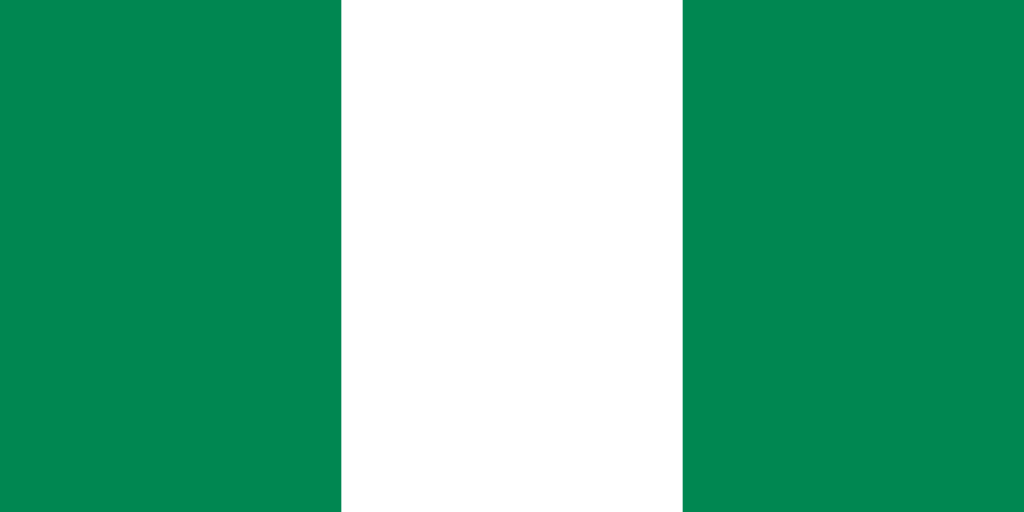
The flag of Nigeria is a simple yet powerful symbol of the nation’s unity, peace, and agricultural wealth. Featuring three vertical stripes of green, white, and green, it reflects the country’s natural resources and its aspirations as Africa’s most populous nation. The flag was officially adopted on 1 October 1960, the day Nigeria gained independence from the United Kingdom.
History of the Flag of Nigeria
As Nigeria prepared for independence, a nationwide competition was organised to design a new national flag. The winning design was created by Michael Taiwo Akinkunmi, a Nigerian student studying in London.
His original proposal included a red sun in the centre of the white stripe, but this element was removed before the flag was officially adopted.
On 1 October 1960, when Nigeria became an independent nation, the green-white-green flag was raised for the first time. Since then, it has remained unchanged and is one of Africa’s most recognisable national flags.
Meaning of the Flag of Nigeria
The colours of the flag have official meanings:
- 🟢 Green represents Nigeria’s rich vegetation, fertile land, and agricultural wealth.
- ⚪ White symbolises peace, unity, and harmony among the country’s diverse peoples.
The simplicity of the design reflects the nation’s hope for a peaceful and prosperous future.
Interesting Facts
- 🇳🇬 Nigeria officially adopted its national flag on 1 October 1960, the day it gained independence.
- 🎨 The flag was designed by Michael Taiwo Akinkunmi, whose winning entry was selected from a national competition.
- 🌍 Nigeria is Africa’s most populous country, with more than 230 million people.
- 🏙️ The city of Lagos is one of the largest metropolitan areas in Africa, while Abuja has served as the capital since 1991.
- 🌿 Despite its simple appearance, the green-white-green design has become one of the most recognisable flags on the African continent.
Conclusion
The flag of Nigeria is a timeless symbol of peace, unity, and national pride. Its green and white colours celebrate the country’s fertile landscapes and the hope for harmony among its many cultures. Today, it proudly represents Africa’s largest population and one of the continent’s most influential nations.