We often talk about travel as an escape. A break from work. A holiday. A chance to see somewhere new, eat different food, take photographs and collect another stamp in the passport. But anyone who has travelled extensively knows that something deeper can happen. Sometimes you return home and nothing has changed except you.
There is a popular claim that people make bigger changes to their lives after travelling than after therapy. That is probably too sweeping to present as scientific fact. Travel isn’t a replacement for therapy, and there is no simple dataset proving that a two-week trip is psychologically more effective than professional treatment. But the idea behind the claim is fascinating, because travel places us in conditions that can make us question routines, assumptions and even our identity. And that can make it an unusually powerful catalyst for change.
Most everyday life is repetitive. We wake up in the same room, travel along familiar streets, speak the same language, see many of the same people and follow roughly the same schedule. Our brains become extremely efficient at navigating this world. Then you travel. Suddenly you have to figure out a metro system covered in unfamiliar writing. You don’t understand the menu. Your bus doesn’t arrive. Your phone loses its connection. You need to communicate with someone who doesn’t speak your language. Even something as simple as buying breakfast can require thought. You are no longer operating entirely on autopilot.
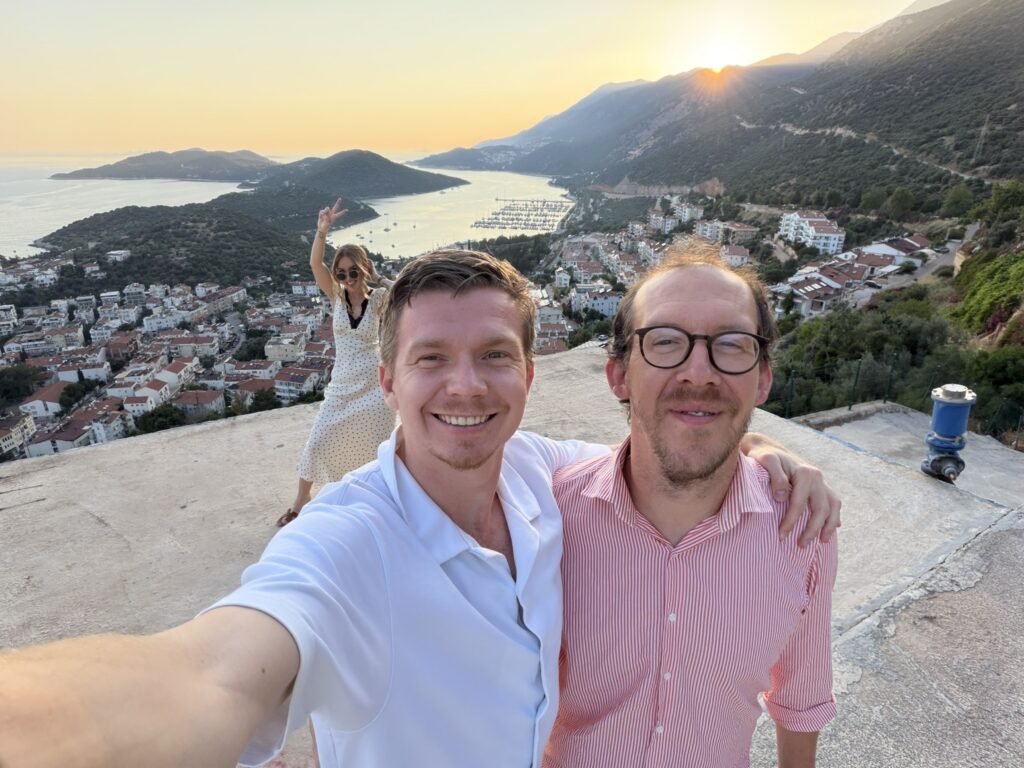
That matters because unfamiliar environments force us to pay attention again. Instead of simply moving through our routines, we start observing. And sometimes that heightened awareness extends beyond our surroundings. We start observing ourselves.
One of the greatest things about travelling is not simply discovering how other people live. It is discovering that your way of living is only one possibility. Spend enough time outside your own country and things you previously considered “normal” begin to look surprisingly cultural. People organise families differently. They eat at different times. They approach work differently. They socialise differently. They have different relationships with religion, money, time, hospitality, privacy and community. You don’t necessarily decide that another society does things better, but you realise things can be done differently. That distinction is important. It is difficult to question your own environment when it is the only environment you know. Travel gives you something to compare it with, and comparison creates perspective.
At home, we carry dozens of identities. Employee, manager, parent, partner, son or daughter, neighbour, colleague, friend. People know our history and often have expectations about who we are. Travel temporarily weakens many of those labels. Walk alone through a city thousands of kilometres from home and nobody knows your job title, what you studied, what mistakes you made ten years ago, or what other people expect you to become. You are simply another human being walking down the street. There can be something strangely liberating about that anonymity. It gives you room to ask a question we don’t ask often enough: who am I when nobody around me already knows who I am?
Travel rarely goes completely according to plan. You miss trains, flights get cancelled, you take the wrong bus, you get lost. Reservations disappear. The weather destroys your plans. Sometimes you find yourself standing somewhere completely unfamiliar thinking, now what? And then you solve it. You find another train, communicate using gestures, ask a stranger for help, improvise. None of these things necessarily sounds extraordinary, but repeated enough times they create evidence that you can handle uncertainty. Confidence doesn’t always come from telling yourself to be confident. Sometimes it comes from repeatedly discovering that you can figure this out. And once you’ve navigated problems thousands of kilometres from home, some problems waiting for you back home can suddenly seem smaller.
At home, uncertainty often feels threatening. While travelling, uncertainty becomes part of the experience. You don’t know exactly what tomorrow will look like, who you’ll meet, whether the restaurant you found will be brilliant or terrible, or whether the road you’re following will lead somewhere interesting. Yet you continue. Travel therefore gives us something valuable: risk without necessarily involving catastrophe. We practise uncertainty, and occasionally we discover that uncertainty isn’t something that must always be eliminated. Sometimes it is where the most interesting things happen.
There is another strange phenomenon I’ve noticed about travelling. Sometimes you have to leave your life temporarily before you can see it properly. From thousands of kilometres away, routines that once seemed permanent suddenly look optional. The job you assumed you had to keep. The city you thought you had to live in. The things you kept postponing. The expectations you were trying to satisfy. Nothing necessarily changes while you’re away, but your perspective does. Travel creates distance, geographically and mentally, and distance can make patterns visible.
Someone can tell you a hundred times that the world isn’t as frightening as you imagine. Then you travel somewhere you were nervous about visiting and discover people inviting you for tea. That experience can outweigh years of assumptions. Someone can tell you that you’re capable of travelling independently. Then you arrive alone in an unfamiliar country, navigate it successfully and realise they’re right. Travel doesn’t merely give us information. It gives us evidence. You experienced it yourself.
It is easy to romanticise travel. Simply boarding an aircraft doesn’t make someone wiser, more tolerant or more interesting. You can travel around the entire planet while remaining inside a comfortable bubble. You can visit fifty countries and learn remarkably little about any of them. Transformation requires curiosity. Talk to people. Take public transport. Walk through ordinary neighbourhoods. Try the food. Ask questions. Get things wrong. Listen. Allow your assumptions to be challenged. The number of kilometres travelled matters far less than how willing you are to engage with what you encounter.
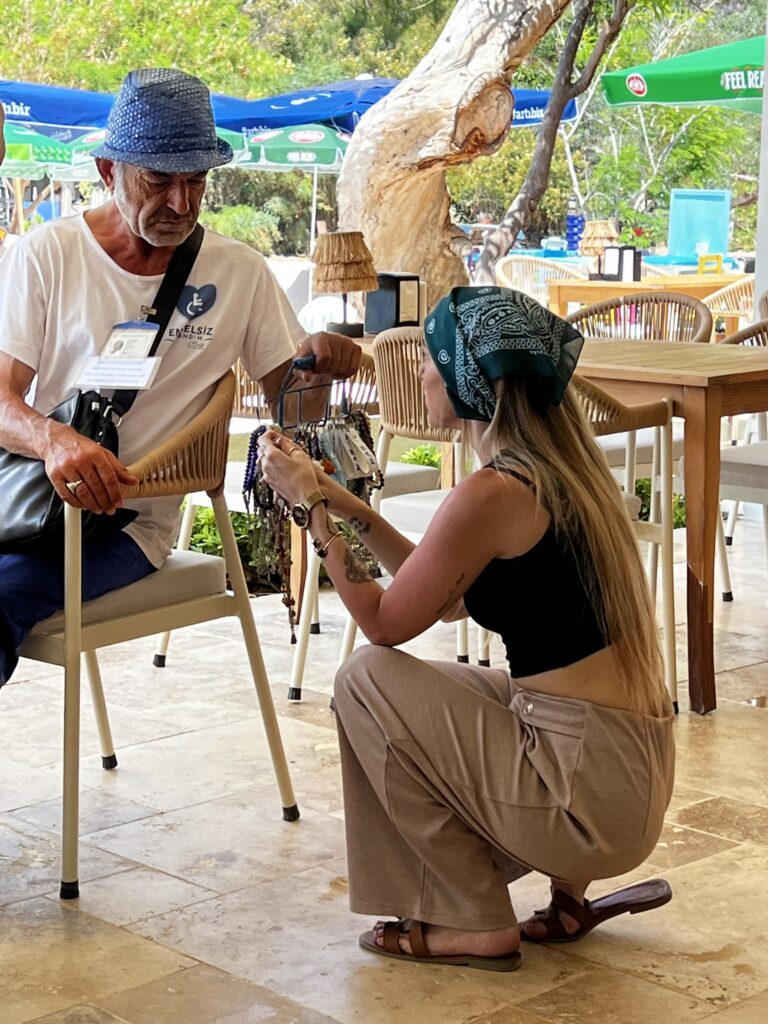
Perhaps this is the most powerful thing travel gives us: possibility. You see landscapes you didn’t know existed. You meet people whose lives are completely different from yours. You discover cultures you previously knew only through headlines. You realise that places you feared can contain extraordinary hospitality. You discover that strangers can become friends. And occasionally you discover a version of yourself that doesn’t appear very often at home. More curious. More courageous. More spontaneous. More comfortable with uncertainty. Travel doesn’t necessarily tell you who you should become. It simply shows you that the person you are today isn’t the only person you could ever be. And sometimes that glimpse is enough to change the direction of a life.