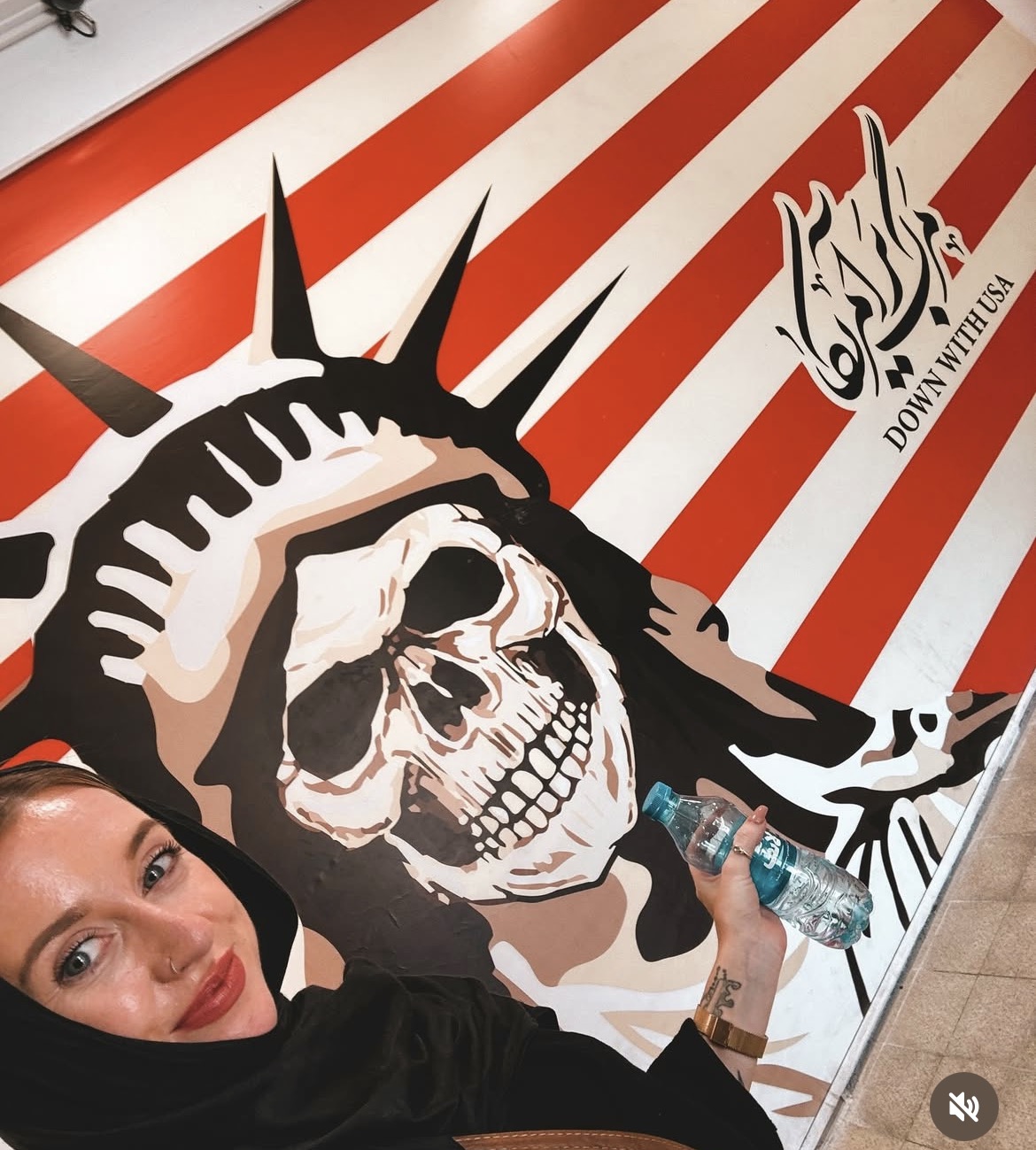
444 days of captivity, decades of foreign interference, and a diplomatic crisis that still shapes the relationship between Iran and the United States.
On November 4, 1979, a group of Iranian revolutionary students stormed the United States Embassy in Tehran. What began as a protest against decades of American interference in Iran turned into one of the most significant diplomatic crises of the twentieth century.
Fifty-two Americans would remain hostage for 444 days.
For Americans, the event became known as the Iran Hostage Crisis. For supporters of Iran’s Islamic Revolution, it represented a confrontation with a foreign power that had spent decades influencing their country’s political future.
Two countries. Two very different interpretations of the same event.
But to understand what happened in Tehran in November 1979, we need to travel much further back.
1953: The Coup That Changed Iran
The story does not begin with Ayatollah Khomeini, the Islamic Revolution, or the American Embassy.
It begins, to a considerable extent, with oil.
In 1951, Iranian Prime Minister Mohammad Mossadegh nationalised the country’s oil industry, challenging the dominance of the British-controlled Anglo-Iranian Oil Company, a predecessor of today’s BP.
For many Iranians, nationalisation was about something much bigger than petroleum. It was about sovereignty, independence, and the right to control their country’s natural resources.
Britain saw the decision as a threat to its economic interests.
The United States, increasingly concerned about Soviet influence during the Cold War, eventually joined Britain in seeking Mossadegh’s removal.
In August 1953, a CIA- and British-backed operation helped overthrow Mossadegh’s government and strengthen the position of Shah Mohammad Reza Pahlavi.
This was not simply an Iranian conspiracy theory. Declassified American government documents confirm US involvement in the operation.
The consequences were profound.
The Shah became an increasingly authoritarian ruler, supported by the United States. His government pursued modernisation and economic development while restricting political opposition and relying on the feared SAVAK security apparatus.
To Washington, Iran was a strategically important ally.
To many Iranians, the Shah represented a political system maintained with foreign support.
The resentment created by the events of 1953 never disappeared.
1979: Revolution Comes to Tehran
By the late 1970s, opposition to the Shah had grown into a revolutionary movement.
It brought together religious conservatives, secular intellectuals, leftists, nationalists, students, and many ordinary Iranians who wanted political change.
In January 1979, the Shah fled Iran.
Ayatollah Ruhollah Khomeini returned from exile the following month, and the monarchy collapsed.
The Islamic Republic was established in April 1979.
But the revolution had not resolved Iran’s relationship with the United States.
When the seriously ill Shah was admitted to the United States for medical treatment in October, many Iranians feared that Washington might once again intervene to restore him or influence their country’s future.
The memory of 1953 was still very much alive.
On November 4, revolutionary students occupied the American Embassy in Tehran.
They demanded the Shah’s return to Iran to face trial and accused the embassy of conducting espionage.
What the students initially presented as a revolutionary action became a prolonged hostage crisis after Ayatollah Khomeini endorsed the occupation.
Some Americans were released during the first weeks. Fifty-two remained captive until January 20, 1981.
They had been held for 444 days.
Whatever the historical grievances against American foreign policy, holding diplomats and embassy personnel hostage violated international law. The International Court of Justice subsequently ruled against Iran.
Understanding the motivations behind an action does not mean justifying it.
But ignoring those motivations makes it impossible to understand why the crisis happened.
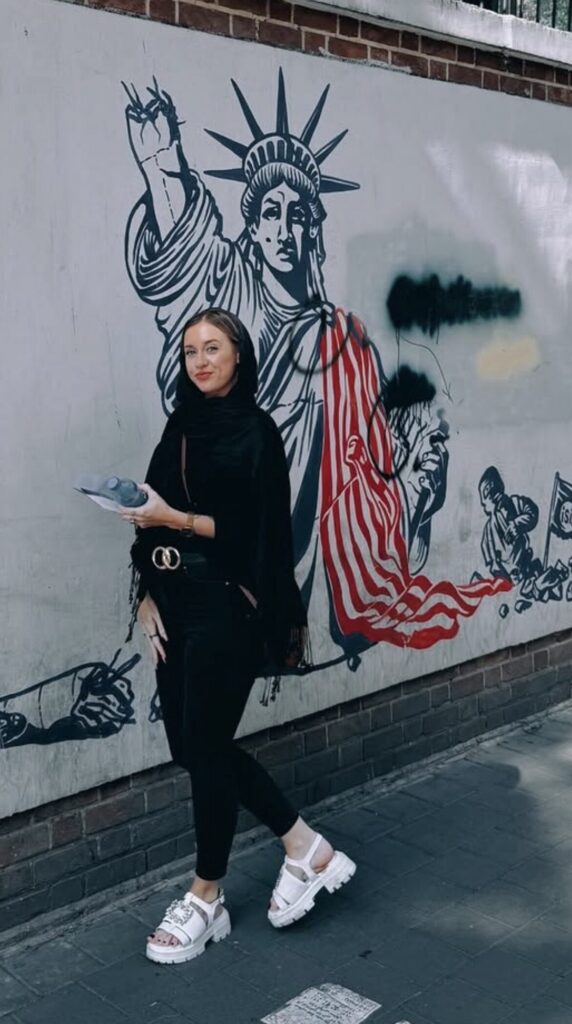
Inside the Former American Embassy
Today, the former American Embassy in Tehran has become one of the city’s more unusual historical attractions.
Known as the US Den of Espionage Museum, the complex presents the events of 1979 from the perspective of the Islamic Republic.
Its walls feature striking anti-American murals, while exhibitions include communications equipment, documents, and rooms associated with the embassy’s former intelligence and diplomatic activities.
It is an extraordinary example of how a building can change its meaning without changing its location.
Once a symbol of American diplomatic influence in Iran, it became a symbol of revolutionary resistance.
For visitors interested in geopolitics, the building offers something beyond an ordinary museum experience.
It is a place where competing narratives of history remain visible.
Of course, the museum itself presents a particular political interpretation. Its displays should be approached critically, just as official narratives presented by Western governments should be questioned.
That is precisely what makes places like this fascinating.
They encourage us to look beyond the version of history we were taught.
1988: Another Tragedy in the Persian Gulf
The hostage crisis was not the last event to deepen hostility between Iran and the United States.
On July 3, 1988, during the final months of the Iran–Iraq War, the American guided-missile cruiser USS Vincennes shot down Iran Air Flight 655.
The Airbus A300 was operating a scheduled commercial flight from Bandar Abbas to Dubai.
All 290 passengers and crew members were killed.
The United States maintained that the aircraft had been mistakenly identified as a military threat.
American officials expressed regret over the tragedy, and the US subsequently agreed to financial compensation without accepting legal liability.
For many Iranians, however, the disaster became another painful chapter in their country’s relationship with Washington.
It is a tragedy that deserves far greater international recognition.
Two decades of Iranian history, from the 1979 embassy occupation to the destruction of Flight 655, illustrate how historical grievances can accumulate and shape relations between countries for generations.
Is Iran Really the Problem?
When Iran appears in Western headlines, the discussion frequently revolves around nuclear weapons, sanctions, regional conflicts, or the policies of the Islamic Republic.
There are legitimate reasons to criticise the Iranian government, including its repression of political dissent and restrictions on individual freedoms.
But criticism of a government should never prevent us from examining the actions of other governments.
Iran’s modern history cannot be understood without considering British imperial interests, American Cold War policies, the 1953 coup, the Shah’s dictatorship, and the consequences of decades of confrontation.
At the same time, understanding Western interference does not erase the responsibility of Iran’s own leaders for their decisions.
History rarely gives us a simple division between good countries and bad countries.
And a country’s government should never be confused with its people.
Why Places Like This Matter
One of the reasons I find travelling so fascinating is that it exposes us to narratives we rarely encounter at home.
A museum in Tehran may tell a very different story from a museum in Washington.
A historical monument in Baghdad might challenge what we learned about Iraq.
And conversations with ordinary people can reveal perspectives that never make international headlines.
That does not mean every local interpretation is correct.
It means there is value in listening, questioning, comparing sources, and recognising that our understanding of the world is inevitably incomplete.
The former American Embassy in Tehran is a perfect example.
To one country, it represents a traumatic violation of diplomatic immunity and the suffering of innocent hostages.
To another, it represents resistance against decades of foreign domination.
Both memories exist.
And neither should be ignored.
The Bigger Picture
Forty-seven years after the American Embassy was occupied, the events of November 4, 1979, remain an important part of Iran’s political identity.
Diplomatic relations between Iran and the United States have never been restored.
The former embassy remains a reminder of how quickly international relationships can collapse — and how difficult they can be to rebuild.
But perhaps the most important lesson extends far beyond Iran.
We cannot understand today’s conflicts if we refuse to examine yesterday’s decisions.
History does not justify every action.
It does, however, help explain how we arrived where we are today.
And sometimes, understanding the world begins by questioning the stories we have always been told.
QuixoticGuide — Widen Your World.
Leave a Reply