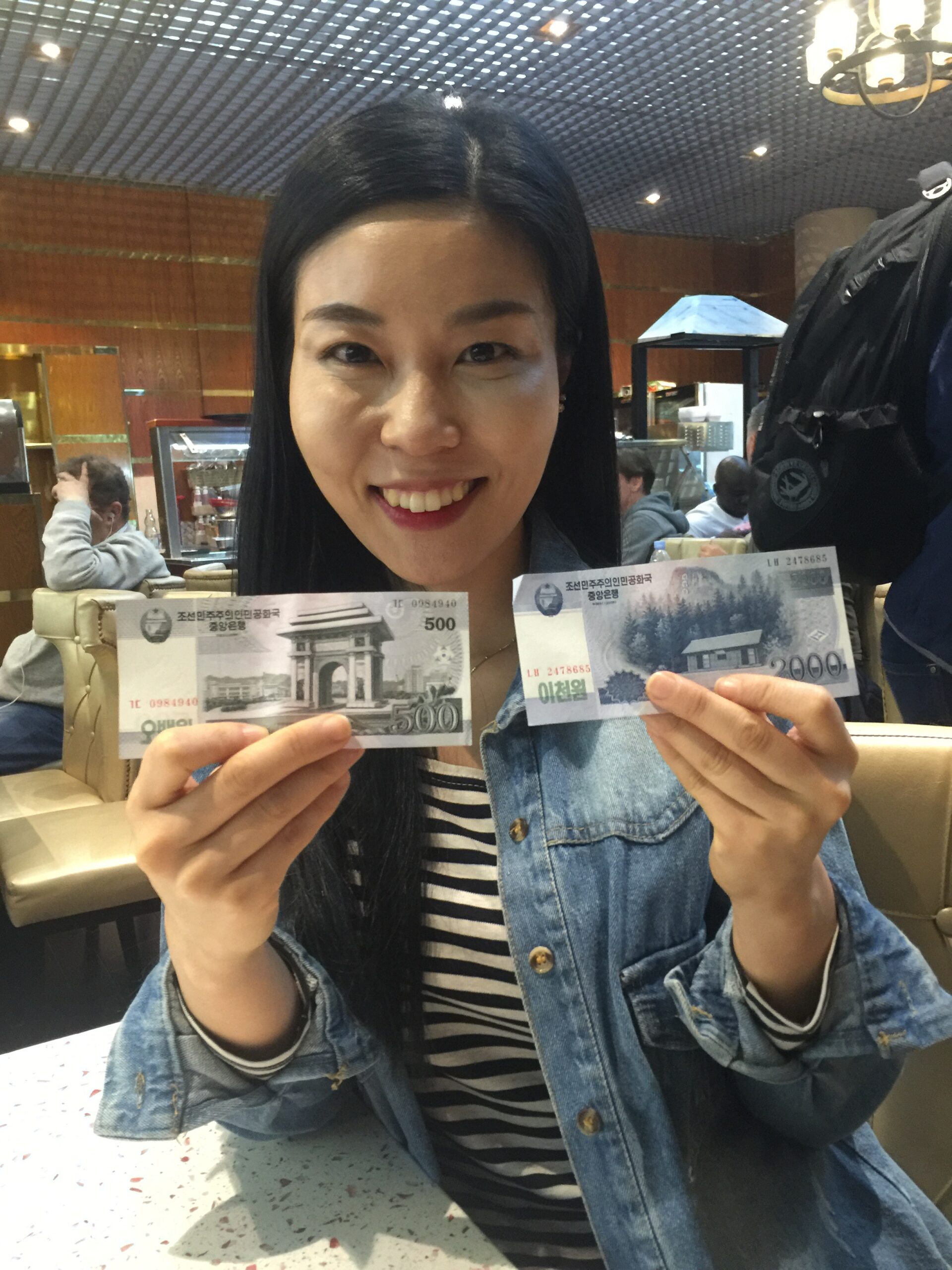
Visa, Mastercard, Apple Pay, Alipay, WeChat Pay, cash, bank transfers, friends, and occasionally a complete stranger who refuses to let you pay. Travelling around the world has taught me that there are almost as many ways to pay for something as there are ways to travel.
You would think that paying for a cup of coffee is one of the simplest things in the world.
Walk into a café, order a cappuccino, pay, and leave.
But after travelling to more than 90 countries, I’ve discovered that something as ordinary as paying for a coffee can become a surprisingly interesting part of travelling.
In Belgium, I might simply tap my bank card or phone. In China, I scan a QR code. Somewhere else, I need a handful of local banknotes. In another country, my international cards might be completely useless.
And sometimes, particularly in the Middle East, I discover that someone has already paid for my coffee before I’ve even had the chance to reach for my wallet.
Then there are the friends you travel with. The ones who pay for a taxi because your card doesn’t work, cover dinner because you have no local currency, or lend you money because the ATM refuses to cooperate.
The world has developed an extraordinary variety of payment systems, from centuries-old coins to sophisticated digital wallets.
Yet one of my favourite payment methods doesn’t involve any technology at all.
It involves people.
1. Cash: The Oldest Payment Method Still Going Strong
There’s something I genuinely enjoy about withdrawing local currency when arriving in a new country.
The unfamiliar banknotes, different colours, unusual denominations, and portraits of people I’ve sometimes never heard of.
Money is more than a way to pay for things. It’s also a reflection of a country’s history, culture, and politics.
Some banknotes feature monarchs. Others commemorate revolutionaries, national heroes, wildlife, or architectural landmarks.
In certain countries, you can suddenly feel like a millionaire simply because of the number of zeros printed on your money.
And despite the rapid development of digital payments, cash remains essential across much of the world.
Small restaurants, markets, rural guesthouses, roadside cafés, taxis, and street vendors may not accept anything else.
I always try to carry some local currency, even in countries where electronic payments are common.
Cash doesn’t need an internet connection. It doesn’t require an app. It doesn’t run out of battery.
It also doesn’t suddenly stop working because your bank considers a foreign transaction suspicious.
Of course, there are disadvantages. Cash can be stolen, exchange rates can be unfavourable, and carrying large amounts isn’t particularly convenient.
But when technology fails, a few banknotes can save your day.
My travel rule: Never assume that a country is completely cashless.
2. Visa and Mastercard: Your International Travel Companions
For most travellers, Visa and Mastercard are among the most useful things to carry.
They make travelling internationally incredibly convenient.
Booking flights, reserving accommodation, paying for restaurants, renting cars, and withdrawing money from ATMs have become considerably easier because of these global payment networks.
But they’re not as universal as their names and advertising might suggest.
There are countries where international cards are difficult to use, where domestic payment systems dominate, or where sanctions have disconnected banks from certain international networks.
And even where Visa and Mastercard are accepted, individual merchants may prefer cash or local payment methods.
Another problem is the cost.
Foreign transaction fees, ATM withdrawal charges, and exchange-rate markups can quietly increase the price of your trip.
I try to avoid dynamic currency conversion, where a foreign ATM or payment terminal offers to charge me directly in euros. Paying in the local currency is usually better when my bank offers a competitive exchange rate.
I also prefer travelling with at least two cards, ideally from different banks.
Because discovering that your only bank card has stopped working while you’re thousands of kilometres from home is not exactly my favourite travel experience.
3. Alipay: China’s QR-Code Revolution
My recent travels through China in October 2026 reminded me just how differently payment systems can develop.
In Europe, we often consider contactless bank cards the future.
In China, the future looks more like a QR code.
Alipay is everywhere.
Restaurants, supermarkets, convenience stores, taxis, ticket machines, street-food stalls, and countless smaller businesses use QR-code payments.
You open the app, scan a code, and pay.
Sometimes the merchant scans your code instead.
What fascinates me is how deeply this system has become integrated into everyday life.
You can buy something from a tiny street vendor without either of you touching a banknote.
For foreign visitors, Alipay has become considerably more accessible. Eligible international Visa and Mastercard cards can be linked to the app, although verification requirements and transaction fees may apply. english.www.gov.cn
This creates an interesting situation.
A merchant might not accept your physical Visa card, yet you can pay through Alipay using that very same Visa card.
Your money hasn’t changed.
Only the technology connecting you to the merchant has.
China demonstrates that the next generation of payments doesn’t necessarily require traditional card terminals everywhere.
Sometimes, all it takes is a printed QR code.
4. WeChat Pay: When Money Becomes Part of Social Life
If Alipay is one side of China’s digital payment revolution, WeChat Pay is the other.
WeChat itself is much more than a messaging application.
It combines communication, social networking, everyday services, and payments in one enormous ecosystem.
Imagine being able to message your friends, book services, pay for dinner, and transfer money without constantly switching between different applications.
That’s part of what makes WeChat so important in China.
WeChat Pay also supports eligible international bank cards for foreign visitors. english.beijing.gov.cn
Having both Alipay and WeChat Pay available is particularly useful because some merchants or services may work better with one than the other.
But China’s digital payment landscape also raises an interesting question.
What happens when an enormous part of daily life depends on a smartphone?
If your battery dies, your account gets blocked, or your internet connection stops working, something as simple as buying lunch can become unnecessarily complicated.
Technology can make travel incredibly convenient.
It can also create new dependencies.
5. Apple Pay: Your Wallet Without the Wallet
I have to admit that I love the convenience of Apple Pay.
No need to search through your wallet.
No need to remember which pocket contains your bank card.
Just hold your phone near a compatible payment terminal.
Done.
In many European countries, paying with a phone has become completely normal.
Apple Pay also works in numerous destinations outside Europe, provided the merchant, payment network, and underlying card support the transaction. Apple Support
But it’s important to understand that Apple Pay isn’t an independent global payment system.
In most situations, you’re still using an underlying bank card.
If that card isn’t accepted, putting it inside your phone won’t necessarily solve the problem.
Nevertheless, for everyday purchases, it’s one of my favourite options.
Especially when travelling light.
6. Local Payment Systems: Every Country Has Its Own Ideas
One of the most fascinating aspects of international travel is discovering payment systems that are barely known outside their home markets.
The world doesn’t revolve exclusively around Visa and Mastercard.
| Payment method | Where it’s particularly important |
|---|---|
| UnionPay | China |
| UPI | India |
| Pix | Brazil |
| M-Pesa | Kenya and other selected markets |
| Bancontact | Belgium |
| iDEAL | Netherlands |
| Mir | Russia |
| Kakao Pay | South Korea |
India’s UPI has made instant payments part of everyday life.
Brazil’s Pix allows people and businesses to transfer money quickly using a national payment infrastructure.
In Kenya, M-Pesa has helped bring financial services to people without conventional bank accounts.
And in Russia, Mir has become increasingly important as access to international card networks has changed.
What I find interesting is that some countries have effectively skipped entire generations of payment technology.
Instead of building a dense network of traditional card terminals, they developed mobile-first alternatives.
It reminds me that technological progress isn’t always a straight line.
Different societies can arrive at completely different solutions to exactly the same problem.
7. Bank Transfers: Sometimes the Simplest Solution
Sometimes you need to pay for something that doesn’t fit neatly into the usual card-or-cash categories.
Perhaps you’re booking a private tour, paying for a guesthouse, arranging transport, or transferring money to someone you know.
A bank transfer can be useful.
Within Europe, transfers are often straightforward.
Across continents, they can become complicated.
Different banking networks, currency restrictions, processing times, and fees can turn a simple payment into a surprisingly frustrating experience.
Services such as Wise can help with some international transfers, depending on the countries and currencies involved.
But it’s another reminder that financial borders haven’t disappeared, even if travelling across physical borders has become easier.
8. Friends: Possibly the Most Reliable Payment Method
Now we’re getting to one of my favourite payment methods.
Friends.
Not a bank.
Not an app.
Not a multinational financial technology company.
Just friends.
Anyone who travels with other people knows exactly how this works.
One person pays for the taxi.
Another pays for dinner.
Someone books the hotel.
Another friend buys the train tickets.
And eventually someone asks the inevitable question:
“Wait, who still owes whom money?”
Travelling with friends can create a surprisingly complicated little economy.
Especially when you’re constantly moving between countries, dealing with different currencies, or visiting places where only one person has a functioning payment method.
Perhaps your Visa card gets declined, but your friend’s Mastercard works.
Perhaps you’ve run out of cash, while someone else still has plenty.
Or perhaps you’re travelling with a local friend who can pay through an app that isn’t easily accessible to foreign visitors.
Suddenly, having friends becomes more useful than having five different banking applications.
Of course, I believe in paying people back and keeping things fair.
Apps like Splitwise are excellent for tracking shared expenses, especially during longer trips.
But I also think there’s something beautiful about not calculating every coffee, snack, or small favour down to the last cent.
Sometimes you buy your friend lunch.
Sometimes they buy you dinner.
Sometimes one of you pays simply because you feel like it.
Over time, things tend to balance themselves out—at least with the right friends.
And honestly, a good friendship is worth considerably more than the price of a taxi.
Visa works in many countries. Mastercard works in many countries. But having good friends makes travelling easier almost everywhere.
Just don’t become the person who always forgets to pay everyone back.
9. Strangers: The Most Unexpected Payment Method
And then there’s the payment method that no banking company can compete with.
The kindness of complete strangers.
It’s something I’ve encountered while travelling, particularly in the Middle East.
You walk into a café, order tea, and start talking to someone.
Perhaps they ask where you’re from.
Perhaps they’re curious about why you’re visiting their country.
Perhaps they’re simply happy to welcome a foreign traveller.
Then, when you ask for the bill, you discover that someone has already paid.
Or the restaurant owner refuses to accept your money.
Or someone insists that you’re their guest.
In countries such as Iraq, Lebanon, Syria, and Yemen, hospitality can be an important part of everyday social culture.
Of course, hospitality exists everywhere, and not everyone in these countries behaves the same way.
But these encounters have left a lasting impression on me.
Especially because some of these places are frequently portrayed internationally almost exclusively through conflict, instability, and danger.
I’ve travelled to Iraq, Lebanon, Syria, and Yemen, and some of my strongest memories involve ordinary people showing extraordinary generosity.
There’s an important lesson in that.
A country’s geopolitical reputation doesn’t tell you everything about the people who live there.
And generosity isn’t something you can measure through economic statistics.
Sometimes, someone who has considerably less money than you will still insist on paying for your meal.
Not because they expect anything in return.
But because, in their eyes, you’re a guest.
I never travel expecting free food, drinks, or favours. And I certainly wouldn’t want to take advantage of someone’s generosity.
But when someone genuinely insists, I try to appreciate the gesture for what it is.
And when possible, return the kindness.
The best payment experiences aren’t always those where the transaction is completed fastest. Sometimes they’re the ones where somebody refuses to let a transaction happen at all.
10. Bartering: When Money Isn’t Part of the Deal
Long before smartphones, credit cards, or modern currencies, people exchanged goods and services.
Bartering still exists in certain places and informal situations.
And although most travellers won’t regularly exchange products instead of money, we occasionally participate in something similar.
Perhaps you help someone with a task and they offer you a meal.
Perhaps you exchange a souvenir.
Perhaps someone offers transportation in return for a favour.
These situations remind us that economic exchange doesn’t always require a formal financial system.
Sometimes, value is exchanged directly between people.
And sometimes, it isn’t even about economic value.
It’s simply about helping one another.
11. The Payment Method Nobody Wants: Your Card Gets Declined
Let’s be honest.
Sooner or later, almost every frequent traveller encounters a payment problem.
Your card gets declined.
The ATM doesn’t accept foreign cards.
Your banking app asks for verification, but you can’t receive the SMS.
The restaurant only accepts cash.
Your mobile wallet stops working.
Or you discover that the only ATM in town is temporarily out of service.
Suddenly, all those impressive international financial networks become irrelevant.
What matters is whether you can actually pay.
This is why I always recommend having several options available.
A backup card, local currency, a charged smartphone, and—in some destinations—a properly configured local payment app can make an enormous difference.
And yes, having a friend who can temporarily cover the bill is extremely helpful.
But that should be your emergency solution, not your financial strategy.
12. My Personal Travel Payment Strategy
What I would take on an international trip
| Local cash | For markets, taxis, tips, small businesses, and emergencies. |
| Visa | For hotels, transport, restaurants, and ATM withdrawals. |
| Mastercard | A second card, preferably from another bank. |
| Apple Pay | Convenient contactless payments where supported. |
| Local apps | Alipay, WeChat Pay, or other destination-specific services. |
| Friends | For shared expenses, unexpected problems, and the occasional coffee. |
| Strangers | Never expected, never taken for granted, but sometimes unforgettable. |
My biggest recommendation is simple: never depend on only one way to pay.
Research your destination before departure.
Find out which payment methods are commonly used.
Download and configure relevant apps in advance.
Check whether your cards work in the country.
Keep emergency cash.
And always have a backup plan.
13. What Does the Future of Money Look Like?
The more I travel, the more fascinated I become by the different directions in which payment technology is developing.
In China, QR codes dominate many everyday transactions.
In India, instant bank-to-bank payments have transformed the financial landscape.
In Europe, contactless cards and mobile wallets are widespread.
In parts of Africa, mobile money provides access to financial services without requiring a conventional bank account.
Meanwhile, cash remains essential in many places.
So what will the world look like in twenty years?
Will physical money eventually disappear?
Will every country develop its own digital payment infrastructure?
Will we use a universal wallet that works across borders?
And what happens to privacy, financial independence, and personal freedom when almost every transaction becomes digital?
There’s also a geopolitical dimension.
International payment networks are not simply convenient pieces of technology. They’re part of the global financial infrastructure.
Governments, banks, and technology companies all influence how money moves.
Economic sanctions can restrict access to payment systems. Domestic alternatives can reduce dependence on foreign networks. And digital currencies could eventually challenge some aspects of the traditional financial system.
In other words, the way we pay for a coffee is connected to much bigger questions about technology, sovereignty, and global power.
That’s what makes something as ordinary as payment methods surprisingly interesting.
Final Thoughts: The Best Things in Life Don’t Always Require Payment
After travelling through more than 90 countries, I’ve discovered that the world has developed an extraordinary variety of ways to exchange money.
I’ve used banknotes featuring unfamiliar leaders, paid with international cards, tapped my phone against terminals, and scanned QR codes in China.
I’ve travelled with friends who paid for things when I couldn’t, and I’ve encountered strangers who insisted on treating me simply because I was visiting their country.
Every payment method tells us something about the society in which it exists.
Cash reflects tradition and independence.
Bank cards represent international financial integration.
Mobile wallets reveal how technology is reshaping everyday life.
Local payment systems show that innovation doesn’t need to follow one universal model.
Friends remind us that trust and cooperation are valuable currencies.
And strangers who pay for your tea remind us that generosity can cross borders more easily than money sometimes does.
Perhaps that’s the biggest lesson.
We spend so much time developing faster, smarter, and more sophisticated ways to transfer money.
Yet some of the most memorable travel experiences happen when money becomes completely irrelevant.
A shared meal.
An unexpected invitation.
A stranger welcoming you into their home.
A friend helping you out when something goes wrong.
No transaction fees. No exchange rates. No QR codes.
Just people.
The world may have hundreds of currencies and countless payment systems, but kindness remains one of the few things that truly works across borders.
Widen your world.
Leave a Reply